Best Synthesia alternatives for video creation 2026
Synthesia made AI avatar videos mainstream. But the AI video market in 2026 looks nothing like it did when Synthesia launched. New platforms offer better automation, more flexible pricing, different creative approaches, and access to AI models that did not exist a year ago.
If you are searching for Synthesia alternatives in 2026, you probably hit one of the common friction points: pricing that locks key features behind enterprise tiers, limited content input options, or a workflow that feels more manual than you expected from an "AI" tool.
I tested eight alternatives head-to-head. Here is how they compare on features, pricing, avatar quality, and the specific use cases where each one wins.
Why people look for Synthesia alternatives
Common limitations users report
Synthesia is a strong platform. But it is built primarily for enterprise L&D teams, and that focus creates friction for other users.
Pricing tightens fast. The free plan gives you 10 minutes of video per month with just 9 avatars. The Starter plan at $18/month limits you to 120 minutes per year. Features like SCORM export, brand kits, and 1-click translation sit behind the Enterprise tier, which requires a sales conversation, according to Synthesia's pricing page.
Limited content input. Synthesia's workflow is primarily script-based. You write or paste a script, then build scenes around it. There is no URL-to-video pipeline for content repurposing. No direct document upload. If you want to turn a blog post into a video, you need to extract the content yourself first.
Scene-by-scene building. Despite being an "AI" platform, Synthesia requires you to build each scene manually. Select an avatar, choose a background, add text overlays, arrange elements. For people expecting hands-off automation, this is surprising.
Enterprise-first features. SAML/SSO, SCORM, compliance tools. These are essential for large organizations. For a solo content creator or small marketing team, you are paying for infrastructure you will never use.
What to look for in an alternative
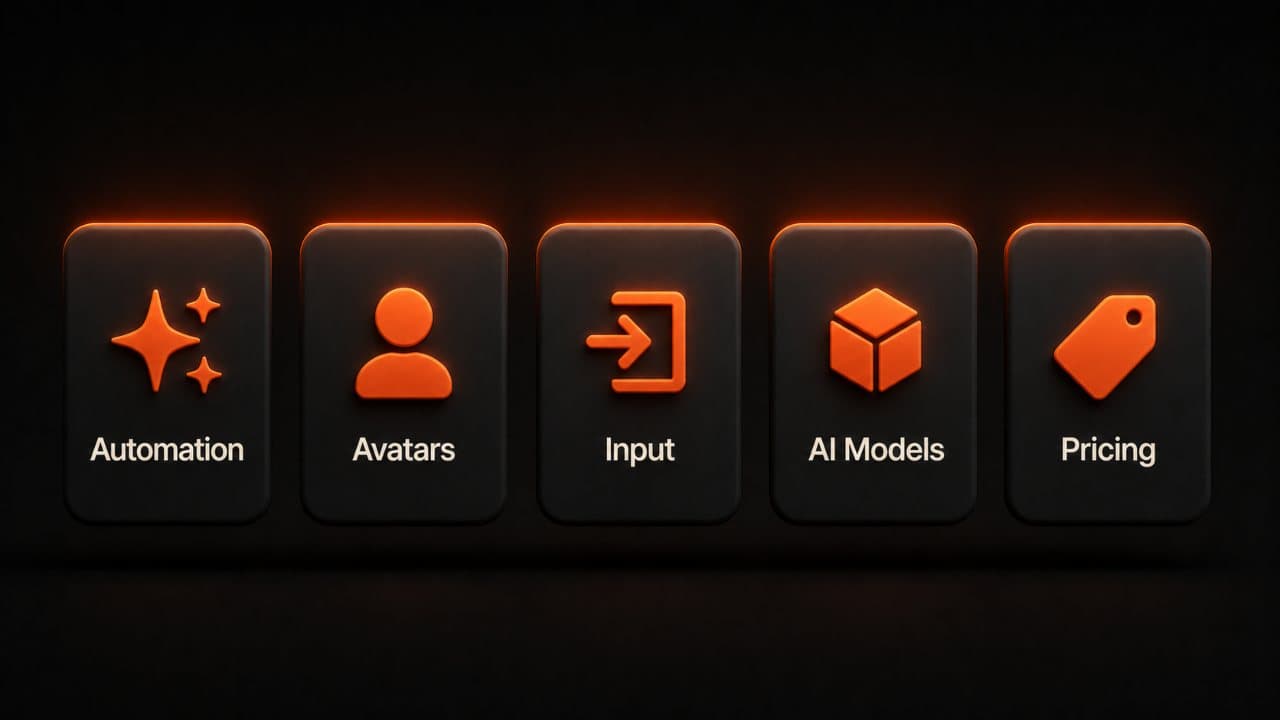
Focus on these five factors when evaluating options.
Automation level. How much does the AI handle on its own? Do you still build scenes manually, or does the platform generate a complete video draft?
Avatar quality. Stock avatar count, custom avatar creation options, and lip-sync accuracy all matter. Photo avatars from a single image are a newer feature that some platforms offer. Our AI avatar video generator comparison covers these options in detail.
Content input methods. Can you paste a URL? Upload a PDF? Or are you limited to typing or pasting a script?
AI model access. Does the platform use the latest generative AI models for imagery and video? Or is it limited to stock footage matching?
Pricing flexibility. Is the pricing designed for solo creators and small teams? Or does the value only appear at enterprise scale?
The 8 best Synthesia alternatives in 2026
1. DeepReel: best AI video agent overall
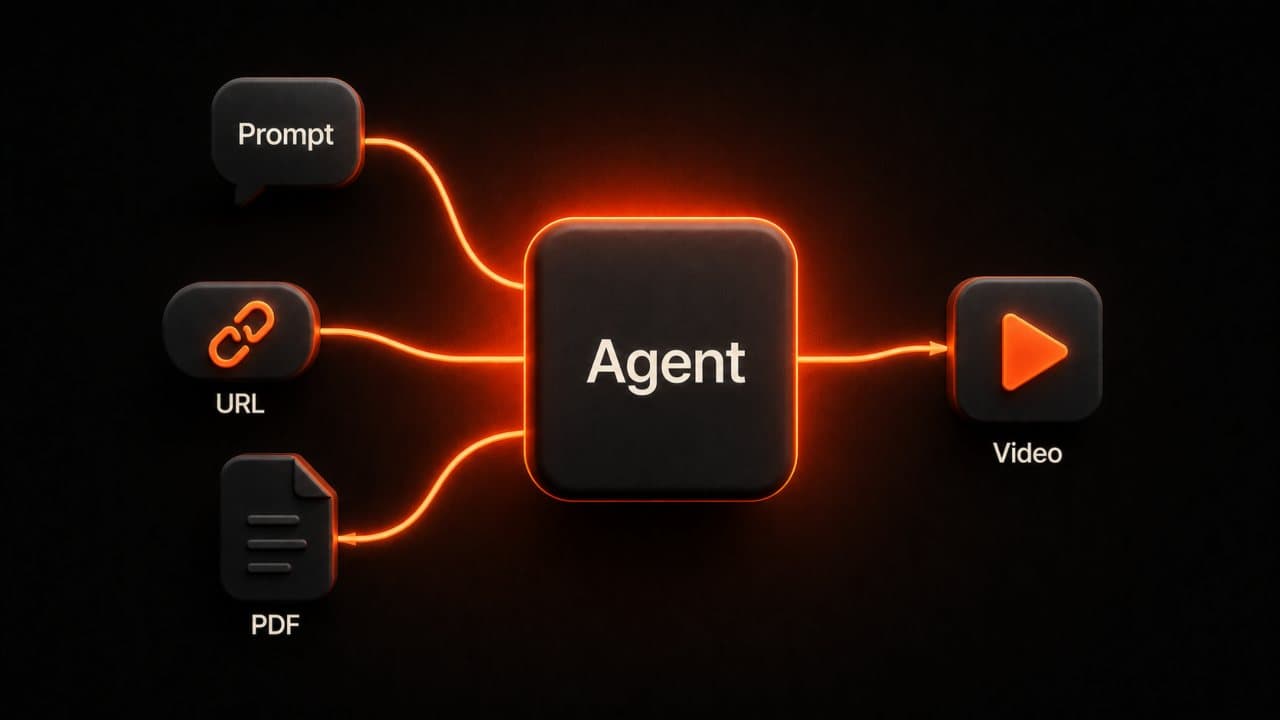
DeepReel takes the top spot because it solves the biggest Synthesia frustration: manual scene-building.
Instead of a scene-by-scene editor, DeepReel gives you an AI agent (called Video Genie) that handles the entire video creation process. Provide a topic prompt, a blog URL, a PDF, or a pre-written script. The AI writes the video script, sources visuals from stock libraries and AI-generated imagery, produces voiceover, assembles the edit, and adds background music.
You get a complete draft in 2-5 minutes. Your job is reviewing and tweaking.
The avatar system includes 100+ stock avatars plus a standout feature: photo avatars from a single image. Upload a headshot and the platform generates a lip-synced speaking avatar. No studio session. No $1,000 add-on.
DeepReel also integrates Google Veo for AI video clips and Flux for AI image generation directly into the creation workflow. The AI agent can generate custom visuals on the fly, which means your videos are not limited to stock footage.
Pricing: Starter $5/month, Pro $25/month, Business $30/seat/month.
Best for: Content creators, SMBs, educators, marketing teams who want fully automated video creation.
Why it is the top pick: DeepReel solves the three biggest Synthesia pain points at once. It automates the scene-building process (AI agent vs manual). It accepts multiple content inputs (URLs, PDFs, not just scripts). And it costs less at every tier. The Starter plan at $5/month gets you more automation than Synthesia's $18/month Starter plan. That value gap is hard to ignore. For a full head-to-head, see our DeepReel vs Synthesia comparison.
2. HeyGen: best for avatar technology
HeyGen is the closest direct competitor to Synthesia in terms of avatar quality. Their Avatar IV model produces full-body motion-captured avatars with natural hand gestures, micro-expressions, and industry-leading lip-sync accuracy across 175+ languages, according to HeyGen's feature page.
The free plan is generous: 500+ stock avatars, 30+ languages, and videos up to 5 minutes. That alone makes HeyGen worth testing.
HeyGen's Video Agent 2.0 automates the script-to-video pipeline from a single text prompt, similar to DeepReel's approach but with a stronger focus on avatar-driven scenes rather than mixed-media video.
The Digital Twin feature lets you create a custom avatar from a 15-second webcam recording. The result replicates your appearance, facial movements, and expressions. HeyGen also offers LiveAvatar for real-time interactive experiences, which is useful for customer-facing use cases.
One watch-out: HeyGen's credit system can be confusing. Advanced features like Avatar IV, lip-synced translation, and AI-generated assets all consume Premium Credits. The Creator plan's 200 monthly credits go fast if you are using the best avatar model. Additional credit packs cost $15/month for 300 credits.
Pricing: Free plan available, Creator $29/month, Business $149/month + $20/seat.
Best for: Teams that prioritize avatar realism and need streaming avatars for interactive experiences.
Limitation: Advanced features consume Premium Credits, which can run out fast. The Creator plan's 200 monthly credits translate to roughly 10 minutes of Avatar IV video, according to HeyGen pricing analysis.
3. InVideo: best template library
InVideo's strength is variety. Over 5,000 templates organized by category, platform, and use case. Marketing videos, social ads, YouTube intros, event promos. If you need a specific format, InVideo probably has a template for it.
InVideo recently integrated Google VEO 3.1 for generative video clips, which is a significant capability boost. The platform also offers access to 16 million+ premium assets from iStock, Shutterstock, and Storyblocks.
The trade-off: InVideo is template-driven with AI assistance, not agent-driven. You are still the director. More hands-on than DeepReel, but more control over the visual choices. Our DeepReel vs InVideo comparison breaks down the full feature differences.
Pricing: Free plan (watermarked), Plus ~$28/month, Max ~$48/month, Generative ~$96/month.
Best for: Marketers who want template-based video production with a massive asset library.
Limitation: AI avatar support is limited. The Generative plan at $96/month is needed for the newest AI capabilities. That is a steep jump from the Plus plan, and it makes InVideo one of the more expensive options for AI video generation despite having a free plan.
4. Pictory: best for blog repurposing
Pictory specializes in turning written content into video. Paste a blog post, article, or script. Pictory's AI breaks it into scenes, matches stock footage, and adds voiceover.
The blog-to-video pipeline is Pictory's core strength. It was one of the first platforms to focus on this workflow, and the text-to-scene matching is reliable. The Professional plan includes ElevenLabs voices in 29 languages, 3 million+ stock clips, and 15,000+ music tracks, according to Pictory's pricing.
Pricing: Starter $25/month, Professional $35/month, Teams $119/month.
Best for: Content teams that publish blog posts and want to convert them into social video at volume.
Limitation: Avatar support is limited compared to DeepReel and HeyGen. The platform focuses on faceless video with b-roll and text overlays rather than presenter-driven content. If you need a talking-head avatar presenter, Pictory is the wrong choice. Also, the $25/month starting price is high compared to DeepReel's $5/month for similar content repurposing capabilities.
5. Veed: best browser-based editor
Veed is an editor first, a creator second. Its real strength is making existing footage better.
Auto-subtitles in 125+ languages, background noise removal, filler word detection, eye contact correction, voice cloning, and AI dubbing. If you already have video footage and need to polish it fast, Veed's editor is hard to beat.
Veed also added AI avatars and AI video generation capabilities. But the foundation is still the editing workflow.
Pricing: Free (watermarked, 720p), Lite ~$12-$19/month, Pro ~$29-$49/month, Enterprise custom.
Best for: Creators who have existing footage and need quick post-production polish.
Limitation: No URL-to-video pipeline. No document upload workflow. Veed is the finishing tool, not the starting tool for content-first video creation. If you are looking for a Synthesia alternative that creates videos from scratch with minimal input, Veed is not it. Think of Veed as a complement to a creation tool, not a replacement.
6. Colossyan: best for diversity and training
Colossyan positions itself in the same enterprise L&D space as Synthesia, but with a stronger emphasis on avatar diversity. The platform offers 170+ AI avatars across different demographics and professional settings, according to Colossyan's features page.
Their NEO 2 video model powers natural, expressive avatar performance with lip-sync across 70+ languages. Videos can be up to 30 minutes long, which makes Colossyan practical for full training modules.
Interactive features like quizzes and branching scenarios are built in. For L&D teams that need viewers to interact with content during training, this is genuinely useful.
Pricing: Free (5 minutes), Starter ~$27/month, Pro/Business $88+/month, Enterprise custom.
Best for: Enterprise L&D teams that need diverse avatar representation and interactive training features.
Limitation: The automation level is lower than DeepReel. Content creation is still scene-based. The platform is enterprise-focused, so solo creators and small teams may find the pricing and features poorly matched to their needs. If you are switching from Synthesia because the enterprise focus does not fit, Colossyan has the same orientation. It is a lateral move, not an upgrade on the automation front.
7. Fliki: best for quick social videos
Fliki combines text-to-video and text-to-speech into a fast, affordable package. The platform offers 1,300+ AI voices across 80+ languages and a library of 10 million+ stock media assets, according to Fliki's pricing page.
The workflow is straightforward. Type or paste text. The AI converts it into a video with voiceover and matched visuals. Fliki is particularly good at producing short social media videos quickly.
Voice cloning is available on the Premium plan. The Standard plan at $28/month gives you 180 minutes of video credits with full HD output.
Pricing: Free (5 minutes, watermarked), Basic $8/month (audio only), Standard $28/month, Premium $88/month.
Best for: Social media creators and bloggers who need fast, affordable text-to-video conversion.
Limitation: AI avatar options are limited to the Premium plan at $88/month. The Standard plan focuses on faceless video with voiceover. For avatar-driven content, you need to budget for that premium tier, which puts Fliki in the same price range as more capable platforms like HeyGen ($99/month) and above DeepReel's Pro plan ($25/month).
Fliki's sweet spot is the Standard plan at $28/month for creators who want fast, simple text-to-video without needing avatars. At that price point, it delivers solid value for social media content production.
8. Steve.AI: best for animated explainers
Steve.AI takes a different approach from everyone else on this list. Instead of live-action stock footage and realistic avatars, the platform focuses on animated videos.
The animation templates and characters are well-designed. You get access to 100 million+ creative assets, and the platform supports text-to-video conversion across multiple animation styles. For educational content, product explainers, and kids' content, the animation approach works well.
Pricing: Basic $15/month, Starter $45/month, Pro $60/month.
Best for: Educators, course creators, and brands that prefer animated explainer content over live-action or avatar-based video.
Limitation: No realistic AI avatars. No content repurposing from URLs or documents. If you want live-action style video with AI presenters, Steve.AI is the wrong tool.
The animation quality is good but it positions Steve.AI in a different category from the rest of this list. Think Animaker or Vyond, not Synthesia. If you are specifically looking for a Synthesia alternative because you want realistic AI avatar videos, skip Steve.AI. If you want to try animation instead, it is a solid option.
How I tested these alternatives
I ran the same test on each platform: converting a 1,200-word blog post about email marketing best practices into a 2-3 minute video. This gave me a consistent benchmark for speed, output quality, and ease of use.
DeepReel was fastest at about 8 minutes total (including review). HeyGen took about 15 minutes with its Video Agent. InVideo and Pictory each took about 20-25 minutes. Veed required the most manual work at around 35 minutes since it does not generate video from text natively. Colossyan and Fliki fell in the 15-20 minute range. Steve.AI produced an animated version in about 12 minutes.
Quality varied by approach. Avatar-driven platforms (DeepReel, HeyGen, Colossyan) produced the most engaging output. Stock footage platforms (InVideo, Pictory, Fliki) produced clean but less distinctive video. Veed's output depended entirely on the footage I brought to it.
Comparison table: all 8 alternatives vs Synthesia
| Platform | Starting price | Avatars | Languages | Content input | Automation level |
|---|---|---|---|---|---|
| Synthesia | $18/mo | 240+ stock | 140+ | Script-based | Scene-by-scene |
| DeepReel | $5/mo | 100+ stock, photo | 30+ | Prompt, URL, PDF, script | Full AI agent |
| HeyGen | Free | 500+ stock | 175+ | Script, text prompt | Video Agent 2.0 |
| InVideo | Free | Limited | 50+ | Text prompt, templates | Template + AI assist |
| Pictory | $25/mo | Limited | 7-29 | Script, blog text | Text-to-scene AI |
| Veed | Free | Basic | 125+ (subtitles) | Existing footage | Editor + AI tools |
| Colossyan | Free | 170+ | 70+ | Script-based | Scene-by-scene |
| Fliki | Free | Limited (Premium) | 80+ | Text-to-video | Text-to-scene AI |
| Steve.AI | $15/mo | Animated only | 20+ | Text-to-video | Text-to-animation |
Frequently asked questions
What is the cheapest Synthesia alternative?
DeepReel's Starter plan at $5/month is the cheapest paid option with meaningful features. HeyGen, InVideo, Veed, Fliki, and Colossyan all offer free plans, but each comes with limitations (watermarks, low resolution, or limited minutes). For getting the most value at the lowest price, DeepReel's $5/month entry gives you AI agent automation, avatar access, and integrations with Canva and Adobe.
Which alternative has the best AI avatars?
HeyGen leads on stock avatar variety with 500+ options and their Avatar IV motion-capture technology. DeepReel leads on custom avatar flexibility with photo avatars created from a single image (no studio recording needed). Synthesia still has strong avatars with 240+ options and natural gestures. Your choice depends on whether you need variety (HeyGen), custom creation flexibility (DeepReel), or a balance of both (Synthesia).
Can I migrate my content from Synthesia?
Most alternatives accept script import. If you have existing scripts from Synthesia, you can paste them into any of these platforms. DeepReel goes further by accepting URLs and documents, so you can recreate content from your published videos' source material. You will not be able to transfer custom avatars between platforms. But creating new avatars is fast on platforms like DeepReel (photo upload) and HeyGen (15-second webcam recording).
The biggest migration cost is not technical. It is re-learning a new workflow. Budget a day to test your top 2-3 picks with real content before committing. Every platform has a free trial or free plan that lets you test without financial risk.
Do these alternatives work for enterprise teams?
HeyGen and Colossyan both offer enterprise plans with SSO, team collaboration, and compliance features similar to Synthesia. DeepReel's Business plan at $30/seat also supports team workflows. InVideo has enterprise options as well. The enterprise landscape has enough competition now that you should not feel locked into Synthesia just because you need compliance infrastructure.
Wrap up
The best Synthesia alternative depends on what frustrated you about Synthesia in the first place.
If the manual scene-building felt slow, choose DeepReel. The AI agent creates complete video drafts in minutes.
If you want better avatar technology, try HeyGen. Their Avatar IV model produces some of the most realistic results available.
If you need templates and stock footage variety, go with InVideo. 5,000+ templates and 16 million assets.
If blog-to-video repurposing is your focus, test Pictory or DeepReel. Both handle it well, with DeepReel offering more automation.
If you need a video editor with AI features, choose Veed.
If enterprise training with diverse avatars is the goal, look at Colossyan.
Start with DeepReel if you want the fastest path from idea to finished video. The free trial lets you test the full AI agent experience. You will know in one video whether the automated approach fits your workflow.