How publishers use AI to turn articles into video
Your readers are becoming viewers, and your competitors are already moving.
The publishing industry has a problem that no amount of paywalls can fix: attention is fragmented. Someone who won't read a 2,000-word article might watch a 5-minute video. Someone who skips email newsletters might save a 30-second video on TikTok. The medium matters more than the message now.
Publishers that figure out how to repurpose text into video are capturing audiences that left years ago. Here's how they're doing it. (If you want the broader playbook beyond just articles, our guide to repurposing content with AI video covers all seven methods.)
The problem: Scale at speed
Traditional publishing has always been about speed. Get the story. Write it fast. Publish it. Repeat. This speed is what gives publications their competitive advantage.
But there's a new problem. Your readers aren't just reading anymore. They're watching.
Video flipped the publishing model. Publishing a video used to mean hiring a videographer, booking studio time, editing for hours. That added a week or two to the production cycle. For a daily news operation, that kills the advantage of breaking news first.
Here's the real challenge: a publisher producing 20 articles weekly can't also produce 20 videos. That would require 20 video crews or massive investment in freelancers. The economics don't work. You're looking at $1,000-$3,000 per video for professional production.
But what if you could turn existing articles into video automatically? In 10-15 minutes instead of 4-6 hours?
Now a publisher can produce 20 articles, immediately convert the top 5-10 into video, and have both formats live by noon. That's distribution multiplied without multiplying cost. Your reporter's work gets 2-3x more exposure.
AI removes that production bottleneck. And publishers who figure this out in 2026 will have a real distribution advantage.
How AI to turn articles into video works
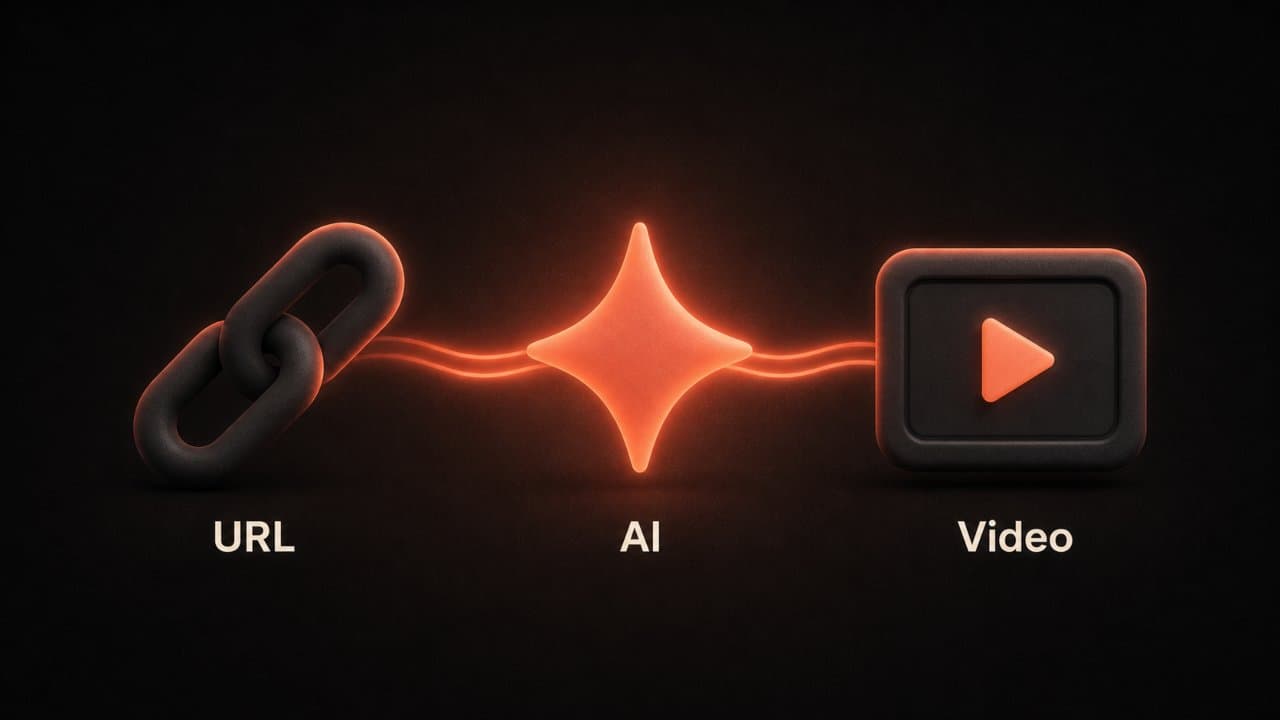
The workflow is simpler than you think.
You have a published article. It lives at a URL. You paste that URL into an AI video tool like DeepReel. The process is nearly identical to converting a blog post to video, but the pacing and tone tend to lean more newsy and authoritative.
The AI reads the article. It extracts the key points. It generates a script — similar to what you'd get from an AI scriptwriting tool — that captures the main message without rewriting the whole piece. It selects imagery that matches the story. It adds motion, text overlays, and pacing. It generates voiceover in your preferred voice. Final output: a 3-5 minute video, ready to post.
This process takes 10-15 minutes. A human doing the same task from scratch would take 4-6 hours.
The quality depends on a few factors. The AI needs good source material. A well-written article with clear structure converts better than a rambling one. The article needs imagery or stock footage that matches the topic. A tech news story has less visual material than a travel story, but video can be created for both.
The voice matters too. Some publishers use a professional voice that matches their brand. Others use multiple voices to add variety. Some add a news-anchor style presentation. Others use conversational language. If you want a consistent brand voice across all your videos, voice cloning for AI video lets you replicate a specific narrator so every piece sounds like it came from the same desk.
The best publishers treat this like any other editorial decision. They listen to a few options, pick the one that matches their brand voice, then move forward.
Preserving your editorial voice
This is the concern I hear most from publishers: "If AI makes the video, is it still my voice?"
The answer is yes, if you treat it right.
The AI doesn't invent. It extracts and reorganizes information that already exists in your article. Your reporting is already there. Your angle is already there. The AI is just reformatting it for a new medium.
The editorial voice happens in three places:
First, in the article itself. How you frame the story. What information you emphasize. What you leave out. That's already decided.
Second, in the voiceover. You choose the voice. Authoritative or casual. Fast or measured. Male, female, or neutral. That's your choice, and it determines how viewers perceive the information.
Third, in the editing and approval process. You watch the video. You say, "That quote works better if it comes first." You say, "Cut 20 seconds from the middle." You say, "Use this image instead of that one." That's editorial control.
Smart publishers review every video their AI generates before it goes live. Takes maybe 5 minutes. Catches any mistakes. Ensures the voice matches the brand.
Implementation: From chaos to system
You can't just turn on AI video and expect it to work. You need a real strategy.
Start with your top content. Look at articles from the past 6 months that got the most traffic, shares, or comments. These already have an audience. Convert these first.
You're not starting from scratch. You're amplifying content that already worked. That content goes from reaching readers to reaching viewers. Your traffic goes up without creating new content.
Create a parallel workflow. Don't replace your article publishing process. Run video creation alongside it.
Here's how it works: A writer finishes an article and publishes it. Simultaneously, a video version goes into production. The video is usually ready within 1-2 hours. You publish the video to YouTube, TikTok, Instagram, wherever your audience watches video. If your team manages multiple social channels, our guide on AI video tools for social media managers covers how to optimize distribution across all of them.
Over time, you'll notice which articles convert best to video. Breaking news converts well. Opinion pieces convert well. How-to guides convert well. Listicles convert well. Long investigative pieces might not. You'll learn your patterns and focus video on what works.
Expand into other languages. Here's where AI video becomes really powerful for global publishers.
Take one article. Make the English video. Now, instead of hiring a Spanish voiceover artist and a Mandarin one, you generate versions in 15 languages. Same video, different audio tracks.
A global news publisher can now reach Spanish, Mandarin, French, German, Portuguese, and Hindi speaking audiences from one article. The cost is nearly zero. The complexity drops to just hitting a button. Our guide on translating video with AI walks through this workflow in detail.
Publications that serve global audiences are already doing this. They'll own their markets in 5 years because of distribution advantage alone.
Don't stop at articles. If your team also produces PDFs, whitepapers, or research reports, those convert just as well — our guide on converting PDFs to video with AI covers that workflow. And for image-heavy content like photo essays or infographics, image-to-video AI can bring those static assets to life.
Making it work: Three strategies
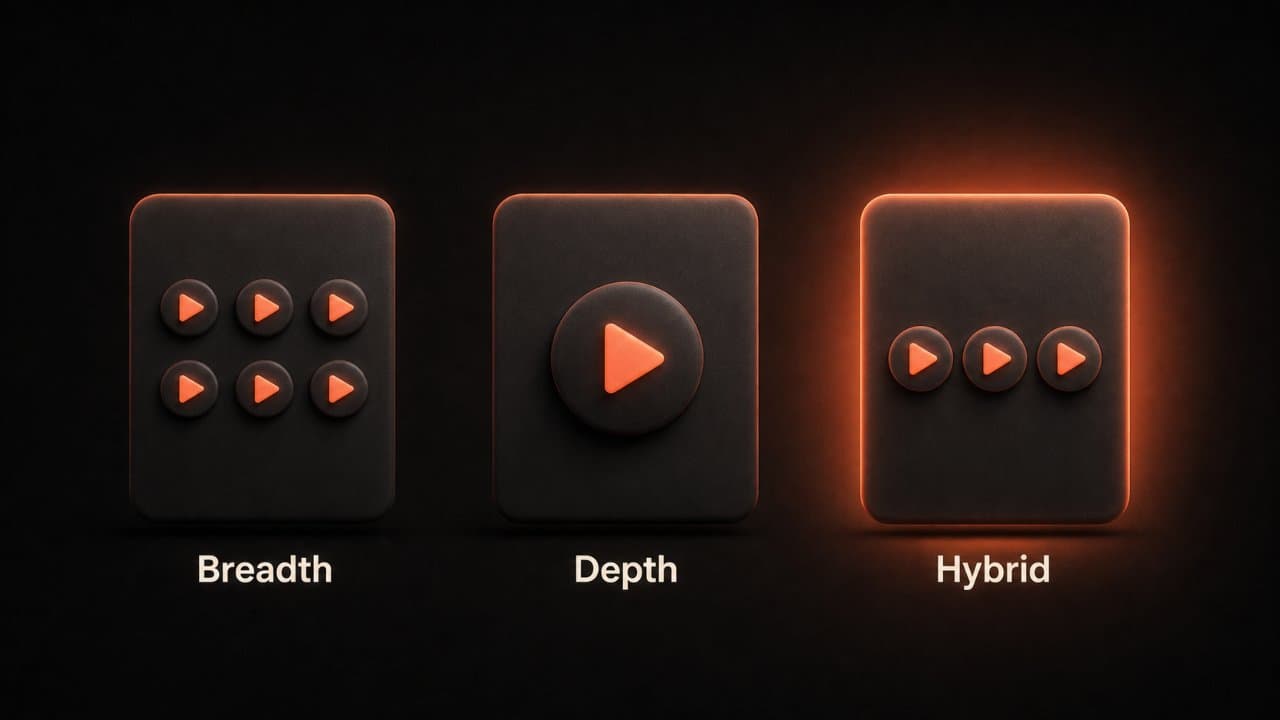
Strategy 1: Breadth. Convert many articles to video, even if the quality is just "good." Volume wins here. More videos means more distribution opportunities and more data about what works. You're learning fast.
How it works: Convert 10-15 articles weekly to video. Don't stress about perfection. Post them. See what resonates with your audience. After 2-3 months, you'll know which topics drive traffic and which don't.
Strategy 2: Depth. Convert fewer articles but invest in customization and quality. Better voiceovers. Animations. Professional editing. More production time per video. You're building authority with polish.
How it works: Pick your top 2-3 articles weekly. Spend 2-3 hours on each video. Add graphics, animations, custom voiceover. Make them broadcast-quality. This approach works if you have budget and want fewer, better videos.
Strategy 3: Hybrid. Convert most articles to quick-turnaround video (breadth), then double down on your top-performing videos with more production value (depth).
How it works: Month 1, convert everything to get volume and data. By month 2, you see which topics are winners. Then spend extra production time on those winners. This combines scale with quality.
Most publishers I talk to start with breadth. They want to see if video even works for their audience. After 50-100 videos, they have data. They see clear patterns. Then they know whether to invest more in depth or stick with breadth. The data drives the decision.
Measuring success
Publishing has always measured success by pageviews and time-on-page. Video adds new metrics.
Track these for your video content:
Watch time. How many total minutes did people watch? A 5-minute video watched by 1,000 people is 5,000 minutes. That's meaningful.
Completion rate. What percentage finished watching? If 80% of viewers complete the video, your pacing is good. If 30% drop off, something's wrong.
Shares and saves. These indicate that viewers found the content valuable enough to pass along or come back to.
Traffic to the article. The video should drive people back to your full article or to other content on your site.
Revenue per view. YouTube pays per view. TikTok doesn't (yet). But TikTok drives traffic to YouTube and your website. Calculate the total value.
Publishers that produce 50+ videos monthly report 15-40% increases in total site traffic, according to data from Tubular Labs. The video acts as a doorway. People discover you on video, then explore your site.
The SEO advantage of turning articles into video
Here is something most publishers miss: video improves your search rankings for the original article. We break this down fully in our video SEO strategy guide, but here's the short version.
Google prioritizes pages with mixed media. An article page with an embedded video gets higher rankings than an identical page without video. According to Forrester Research, pages with video are 53x more likely to rank on the first page of Google results.
The mechanism is simple. Video increases time-on-page. A visitor who reads your article and watches the embedded video spends 2-3x longer on the page than a visitor who only reads. Google interprets longer dwell time as a quality signal. Better quality signal means higher rankings. Higher rankings means more traffic. More traffic means more revenue.
There is a second SEO benefit. YouTube is the second-largest search engine in the world. When you publish a video version of your article on YouTube, you are ranking for the same keywords on a completely different platform. Your article ranks on Google. Your video ranks on YouTube. You own two spots instead of one.
The publishers doing this well include a link back to the full article in their YouTube description. That drives YouTube viewers to the website. It also creates backlinks that improve domain authority.
This is not a small effect. Publishers who add video to their top-performing articles report 20-40% increases in organic traffic within 90 days. The video itself brings new viewers. The SEO improvement brings more readers. Both compound over time.
Building your article-to-video team
You do not need to hire a video team. That is the whole point.
For small publishers (under 50 articles per month), one editor can manage the entire video workflow. They spend 30-60 minutes daily converting top articles into video, reviewing output, and scheduling distribution. That is it.
For medium publishers (50-200 articles per month), you might dedicate one full-time person to video operations. Their job is not editing video. Their job is selecting which articles to convert, reviewing AI output, and managing distribution across YouTube, TikTok, Instagram, and your website.
For large publishers (200+ articles per month), the video operation becomes a small team of 2-3 people. But compare that to the 10-20 person video department you would need without AI. The cost difference is significant.
The key hire is not a video editor. It is someone who understands your editorial voice and can review AI output quickly. They need editorial judgment, not technical video skills. The AI handles the technical work.
Frequently asked questions
Won't AI video replace human journalists?
No. AI makes videos from existing articles. It doesn't report. It doesn't interview. It doesn't investigate. It converts finished work into a new format. A newsroom still needs reporters. AI video just means reporters' work reaches more people.
How much does it cost to convert articles to video?
AI video platforms like DeepReel start at $5/month for 10 videos, $25/month for 100 videos, or $30/month for unlimited. At scale, you are spending roughly $0.30-$3 per video. Compare that to hiring a freelance videographer at $500-$2,000 per video.
How do I handle breaking news with AI video?
A breaking news article can be converted to video within 15 minutes of publication. The AI reads the published article, generates the video, and you review it. For time-sensitive stories, some publishers skip the review step and publish directly, then review and update if needed. Your video can be live on YouTube and TikTok while competitors are still booking their video crew.
What types of articles convert best to video?
Breaking news, opinion pieces, how-to guides, and listicles convert best. They have clear structure and strong hooks. Long investigative pieces are harder because the nuance gets lost in a 3-5 minute video. For those, consider creating a teaser video that drives readers to the full article instead of trying to condense the entire piece.
Wrap up
The readers who consumed your content on the web are now spending time on video platforms. That shift is already happening, and the publishers responding to it are seeing results.
The good news is that you already produce the core asset: articles. AI video lets you repurpose that work for new audiences without rebuilding your entire operation.
Start small. Convert your top 10 articles this month. Publish them on YouTube, TikTok, and your website. Measure what works. Then scale what you know works.
The publishers getting ahead in 2026 will not be the ones with the biggest video budgets. They will be the ones that figured out how to turn articles into videos in minutes instead of weeks.
Start converting your articles into video with DeepReel. Paste a URL, generate a video, and publish it alongside your article. Your first video will be live before lunch.