How to clone your voice for AI video narration
Your voice is part of your brand.
When people hear you speak, they know it's you. Your tone, your pace, your accent, your quirks. These things matter. They make you recognizable.
The problem is that recording voice narration is slow and annoying. You need a quiet space. You need good audio equipment. You might need to do 10 takes to get it right. Then you're done for the day because your voice is tired.
Now there's a better way: voice cloning.
Voice cloning lets you record a short sample of your voice once, and then generate as much narration as you want in your voice forever. I'll show you how it works and how to do it.
How voice cloning works
Let me explain the technology without the jargon.
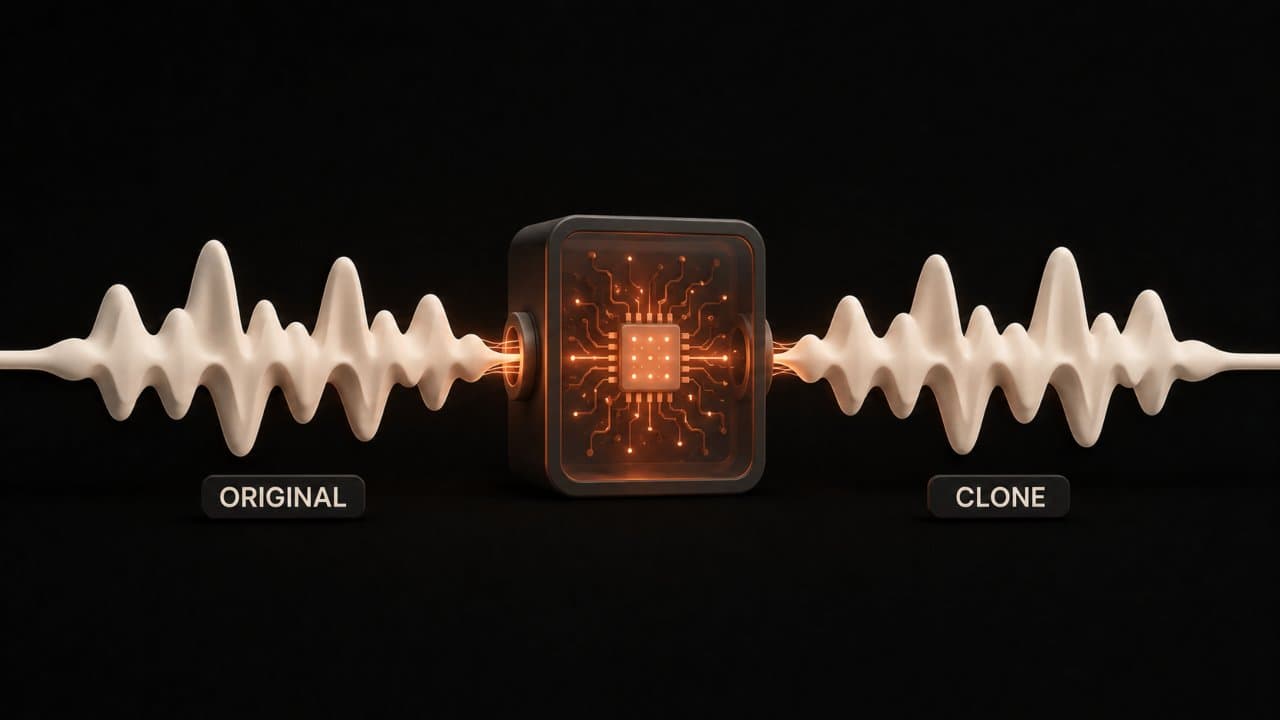
A voice cloning system listens to a sample of your voice and learns the patterns. It learns how you pronounce words. How you pause between thoughts. What your natural pitch is. How your voice moves up and down. How fast or slow you normally talk.
Once the system understands those patterns, it can generate new speech in your voice. You write a script. The system reads it aloud in your voice. You don't have to record anything else.
The quality in 2026 is better than most people expect.
Five years ago, cloned voices sounded robotic. You could tell immediately it wasn't a real person. The quality was maybe 40% acceptable.
Today, cloned voices are 85-90% indistinguishable from the real thing. If you listen to a 30-second clip, you probably can't tell it's not actually you. If you listen very closely for audio artifacts or weirdness, you might notice something. But for video narration, it's flawless.
According to research from Microsoft on voice cloning quality, modern systems can achieve naturalness ratings that rival human speech for most applications. The tech is legitimately good now.
Here's why it matters: you sound like you. Your audience hears your voice. Your brand stays consistent.
Why voice cloning saves hours per video
Before cloning, here's what making a narrated video looked like:
You schedule time in your calendar to record. You find a quiet room or rent a recording studio. You set up a microphone (or use your phone in a pinch). You read your script out loud, probably 3-5 times because you mess up words or the pacing is wrong. You export the audio. You hope it sounds professional.
Total time: 30 minutes to 2 hours depending on the script length and how many takes you need.
With voice cloning:
You generate narration by pasting your script into the AI agent. It generates it in your voice. Takes 1 minute. You listen to 30 seconds to make sure it sounds right. Done.
The time savings are obvious. And the quality holds up.
Even better: your voice is consistent. Every video you make sounds like you. Your audience gets used to hearing your voice. It builds familiarity. That matters more than most people realize.
Step-by-step: Clone your voice
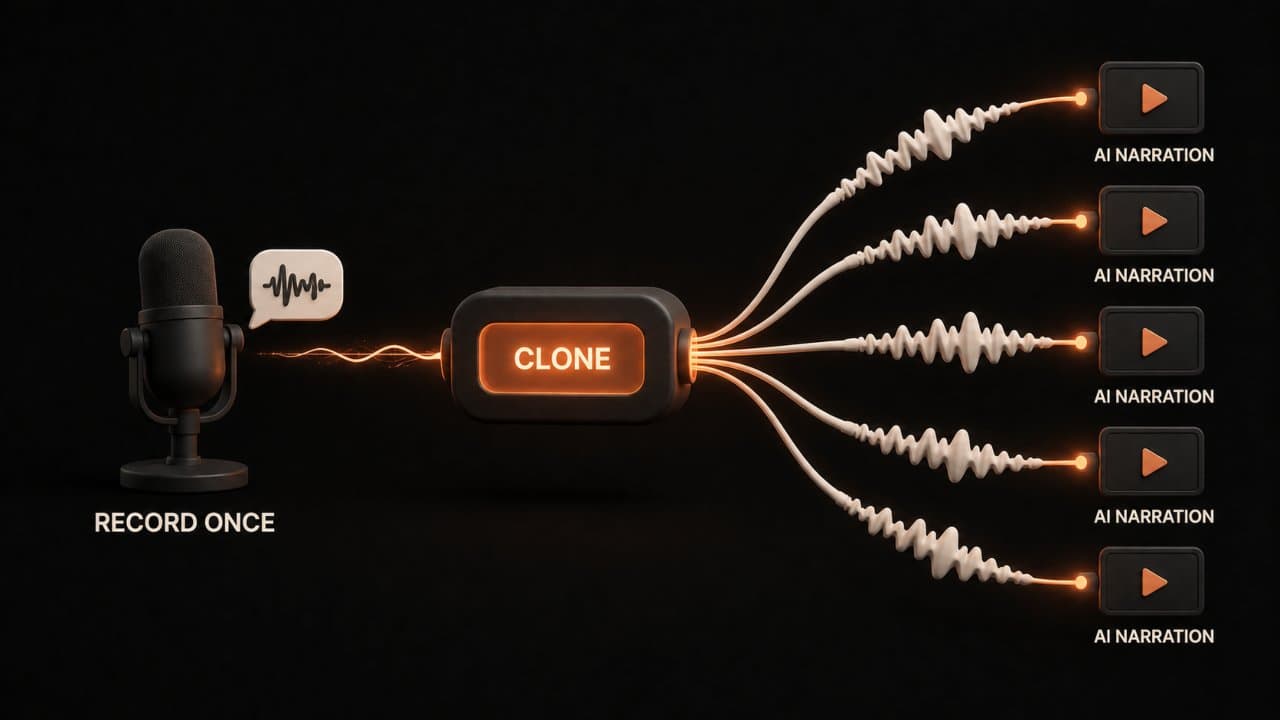
Let's walk through the actual process.
Step 1: Prepare your environment. You need a quiet space and a device that can record audio. Your phone works fine. You're looking for an environment with no background noise. Not a perfectly silent professional studio. Just somewhere quiet.
Close your windows if you can hear traffic. Turn off fans. Mute your phone. This is easy.
Step 2: Record a sample. You need between 30 seconds and 2 minutes of your voice reading naturally. This isn't a performance. Just read some text at a normal pace, in a normal voice. No weird accents or dramatic delivery.
Read something simple. It doesn't have to be related to your business. "The lazy dog jumped over the fence on a sunny afternoon" works fine. Just read naturally and clearly.
One take is usually enough. You can do 2-3 takes if you want to pick the best one.
Step 3: Upload and process. Go to your AI video agent (like DeepReel) and upload the audio sample. The system processes it. This takes 2-5 minutes. The AI is learning your voice patterns.
While it's processing, go get coffee or check your email.
Step 4: Test your clone. Once it's done, the system generates a test clip using your voice. Usually it's a short sentence like "Hello, this is my cloned voice."
Listen to it. Does it sound like you? If yes, you're done. If something's off (maybe the pitch is too high or the pace is too slow), you can try a different sample or adjust the settings.
Usually it's perfect on the first try.
Step 5: Start using it. Now every video you make can use your cloned voice. You write a script. You tell the agent to use your voice. Boom. Narration.
That's it. You spent 5 minutes recording a sample and 5 minutes testing it. Now you have unlimited narration in your voice.
Using your cloned voice
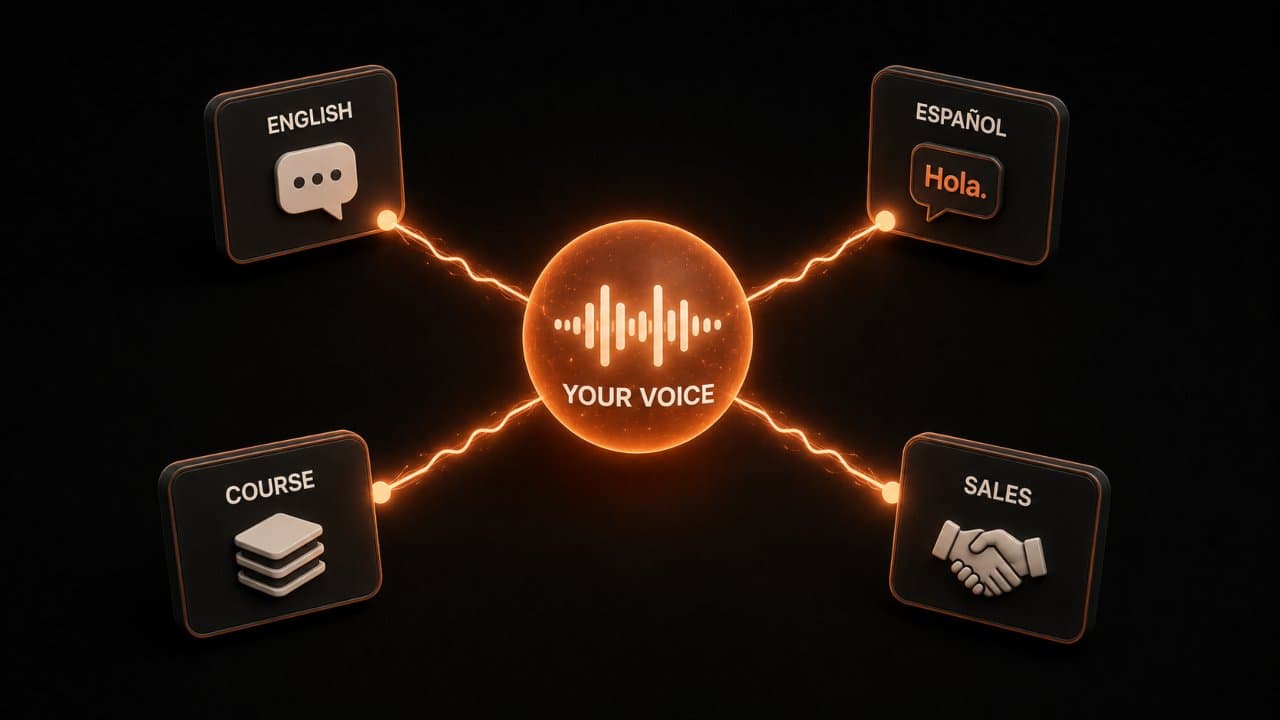
Once your voice is cloned, here are the smart ways to use it.
Personal brand building. If you're a founder or executive, your voice in your videos makes you memorable. Your audience hears the same voice across 50 videos. They recognize you. You become a person, not a faceless company. If you want a visual presence to match, pair your cloned voice with an AI avatar.
Multi-language videos. This is the clever part. You clone your voice in English. You can then generate narration in Spanish, French, German, etc. in your voice, and add subtitles to reach even wider audiences. Your audience in other countries hears you, but in their language.
Your marketing reaches 10x more people and you still sound like you in every version.
Course and training content. If you make online courses or training videos, consistency matters. Your voice in every lesson makes the course feel cohesive. With voice cloning, every lesson has the same voice and tone.
Scaling your content. You can create personalized video at scale. 10 videos a day, all with your voice, without recording anything new. Your voice is now decoupled from time. You can make as much content as you want.
Different character voices. Some platforms (including AI character generators) let you clone multiple voices. You could clone your normal voice and a "serious presentation" voice and an "excited announcement" voice. Different contexts, same person.
The limitations are worth knowing
Voice cloning is good, but it's not perfect.
It still struggles with extreme emotions. If your script calls for crying or laughing or yelling, the clone might sound artificial. Natural speech has emotion baked in. Cloned speech sometimes misses it.
It also sometimes struggles with proper nouns or brand names you made up. If your company name is "Zymo" or "Quora," the clone might mispronounce it the first time. You can usually fix this by tweaking the script.
And technical jargon sometimes gets weird pronunciation. If your script is full of acronyms or specialized terms, you might need to spell out phonetically how it should sound.
These are minor issues. They're not deal-breakers. Most scripts don't hit these problems. But if you notice weird pronunciation, you can usually fix it by rewriting that specific sentence.
The legal and ethical stuff
You should know that voice cloning raises some real questions.
The technology is fine to use for your own voice. You own your voice. You can use it however you want.
But the ethical line is clear: don't clone someone else's voice without permission. That's fraud. That's potentially illegal. Don't do it.
Most platforms have terms of service that require you to own the voice or have explicit permission. Follow those rules.
Also, be transparent with your audience if you're using a cloned voice. If someone is hearing your voice, they might assume you're actually recording. You don't have to announce "this is a cloned voice" in every video. But if you're asked, be honest about it.
This is basic integrity stuff. Use the technology right and there's no issue.
Voice vs. generated voices
I should mention the alternative: using an AI-generated voice instead of your own.
Generated voices are fine. They're getting better. There are thousands to choose from. Different accents, ages, genders, tones.
But a cloned voice has one clear advantage: it's recognizable as you. According to Wyzowl's video marketing data, viewers are more likely to engage with content that feels personal. Your audience hears it and they know who's talking.
That's worth something. For personal brands, thought leaders, and founders, a cloned voice is better than a generic generated voice.
For companies that want a more generic, professional narrator voice, a generated voice might be fine.
Think about the difference psychologically. When someone hears your voice in video after video, they feel like they're getting content directly from you. There's intimacy there, even though it's AI-generated. When they hear a generic professional voice, it feels more distant and corporate.
If building a personal brand is important to your business, cloning your voice is worth the small effort. If you're a company that wants to feel institutional and professional, a generated voice might fit better.
Pick whichever fits your brand.
When to record a new sample
You don't need to re-record your voice every time. One recording works forever.
But if your voice changes significantly (you get older, you change accents, you get sick), you might want to re-record.
Also, if you're not happy with how your clone sounds, record a new sample. Sometimes reading in a slightly different tone or pacing changes the result.
But most of the time, your original sample works great indefinitely. It's a one-time investment.
FAQ
How much does voice cloning cost?
It varies by platform. Some charge a one-time fee of $50-200 to clone your voice. Some charge per video generated ($0.10-0.50 per minute). Some include it as part of their monthly plan. Check your platform's pricing. For most people, it's inexpensive compared to hiring a voice actor.
Can I use my cloned voice for podcast episodes or audiobooks?
Technically yes, you can use your cloned voice for longer content. Some platforms are fine with it. But legally, check with your platform's terms. Also consider the ethics: if you're publishing a book or podcast, should your audience know it's a clone? The answer is "it depends on the context," but be thoughtful.
What if I don't like the cloned voice?
Record a new sample. You can clone your voice multiple times. Try a different reading style, different emotional tone, or record in a different room. Most people find their clone sounds great on the first try, but if you're unhappy, you can iterate.
Wrap up
Voice cloning lets you scale your video production without losing the personal touch of your own voice.
You record a sample once. You use it forever. Every video has your voice. Your brand stays consistent. Your audience recognizes you.
If you've been avoiding video narration because you hate recording yourself, or just want to make videos without showing your face, this solves that problem. Record once, use forever.
Start with DeepReel and record your first sample this week.