How to start a faceless YouTube channel with AI
Some of the most-watched YouTube channels never show a face.
Daily Dose of Internet has 20 million subscribers. WatchMojo has nearly 26 million. Lofi Girl passed 15 million. None of these channels rely on a single person appearing on camera.
Faceless YouTube channels now make up 38% of all new creator monetization ventures, up from just 12% in 2022, according to AutoFaceless. That is a 217% increase in three years.
AI tools have made this growth possible. You no longer need editing skills, a camera setup, or even your own voice to create professional YouTube content. A faceless YouTube channel with AI is now something you can launch in an afternoon and scale to daily uploads within a week.
This guide covers everything: niche selection, channel setup, video creation with AI, YouTube SEO, monetization, and building a production system that scales.
Why faceless YouTube channels are booming
The rise of faceless content
Three forces are driving the trend.
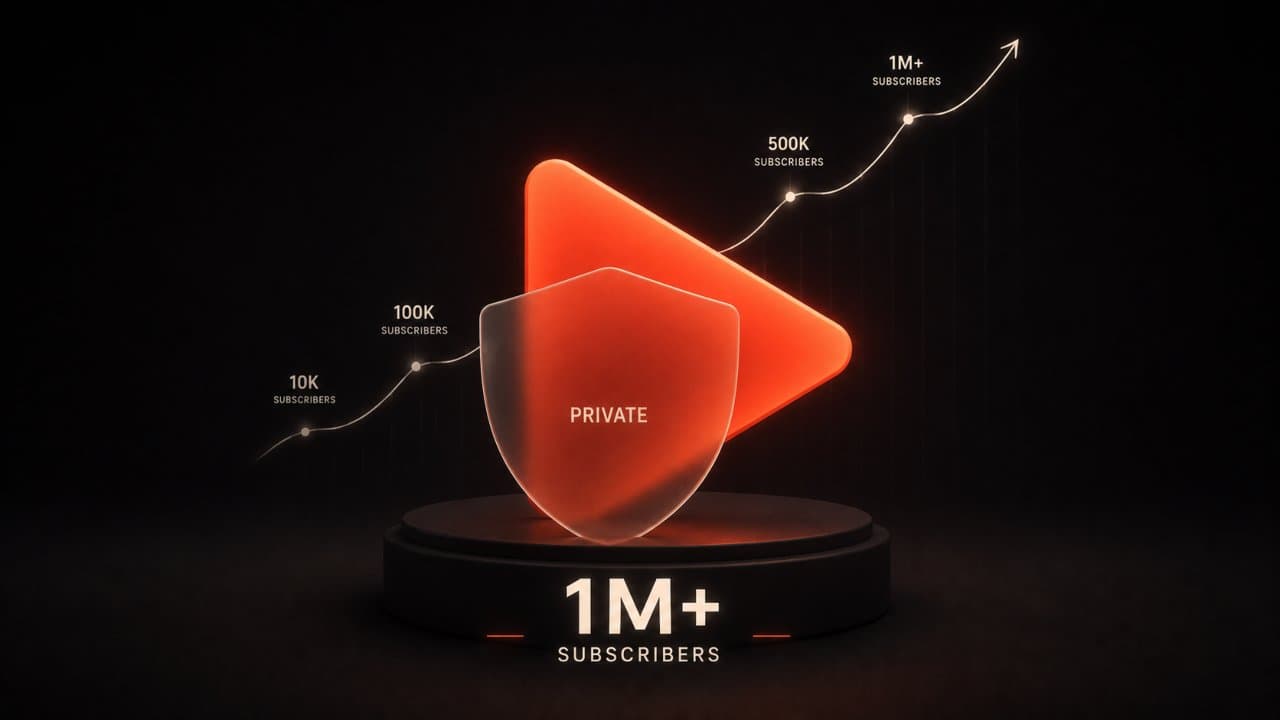
Privacy. Many creators want the benefits of YouTube income without the downsides of being a public figure. No comments about your appearance. No pressure to film when you are tired. No doxxing risk.
Scalability. When content does not depend on one person being on camera, you can produce more of it. Outsource scripts. Batch-produce videos. AI handles the visual and audio production. You manage the strategy.
Consistency. Camera-based creators deal with lighting, location, energy levels, and appearance. Faceless channels look the same whether you create the video at 6am or midnight. The quality is determined by the content, not the creator's mood.
Top-performing faceless channels earn serious revenue. DaFuq Boom reportedly earns between $500,000 and $1.3 million monthly. Daily Dose of Internet earns $140,000 to $400,000 monthly, according to revenue analysis from Awisee.
You do not need to hit those numbers for a faceless channel to be worth running. The average faceless channel can generate $12,000 to $120,000 per year, depending on niche and consistency.
Niches that work best for faceless channels
Not every niche fits the faceless format. The best niches share three traits: high search volume, visual content potential, and the ability to produce videos without original footage.
Education and explainers. History, science, psychology, technology, language learning. These topics work well with stock footage, animations, and AI voiceover. Viewers come for the information, not the presenter.
Finance and investing. Budgeting tips, market analysis, passive income strategies. This niche pays well because of high CPM rates ($8-$25 per 1,000 views), and the content is naturally suited to charts, numbers, and screen recordings.
Motivation and self-improvement. Stoicism, productivity, habit-building. These channels use cinematic b-roll with voiceover narration. The format is proven and produces high watch time.
Technology and AI. Tool reviews, tutorials, tech news. Screen recordings and AI-generated visuals work naturally in this space.
True crime and mystery. Storytelling with stock footage, maps, and AI narration. This niche has strong audience retention and high subscriber conversion.
Listicle and ranking channels. Top 10 lists, comparisons, rankings. The format is simple, repeatable, and performs well in YouTube recommendations.
Pick a niche you can produce 50+ videos about. If you run out of ideas after 10 videos, the niche is too narrow.
One more thing to consider: audience overlap between niches. Finance and technology overlap well. History and psychology overlap well. Picking niches with natural overlap gives you more topic flexibility without confusing your audience or diluting your channel focus.
I recommend making a list of 30 video titles before committing to a niche. If you can write 30 compelling titles without struggling, the niche has depth. If you stall at 15, look for a broader or adjacent category.
Step-by-step guide to starting a faceless AI YouTube channel
Step 1: choose your niche and content style
Start by answering three questions.
What topics can you write or research about consistently? You need a niche where you can produce content week after week without burning out on research.
What is the search demand? Use YouTube search suggestions, Google Trends, and tools like TubeBuddy or VidIQ to check monthly search volume for your target topics.
What is the competition like? Look for niches where existing channels have strong view counts but where you can differentiate with better research, newer information, or a different angle.
Once you pick a niche, choose a video format. The main faceless formats for AI creation are: faceless explainer (b-roll + voiceover), AI avatar presenter (an AI-generated talking head delivers the content), storytelling video (cinematic visuals with narrative voiceover), and screen recording with voiceover (best for tutorials and software). Our guide to making videos without showing your face covers each format in more detail.
AI video tools like DeepReel support all four formats. When you create a video, you select the style that matches your content.
Step 2: set up your channel and brand kit
Create your YouTube channel with a name that signals your niche. "TechPulse Daily" tells viewers immediately what to expect. "John's Channel" does not.
For branding, you need a channel banner (2560 x 1440 pixels), a profile image (800 x 800), and a consistent visual style for thumbnails. AI image generators can create all of these. Canva or Adobe Express also work well for channel art.
Set up a brand kit in your AI video tool. This includes your logo, brand colors, fonts, and any standard intro or outro elements. Consistency across videos helps with brand recognition and subscriber conversion.
Write a channel description that includes your target keywords. "Weekly AI and technology explainers to help you understand the tools shaping your future" is better than "Videos about tech stuff."
Step 3: create your first video with AI

Here is the actual workflow using an AI video agent like DeepReel.
Option A: Start from a topic. Type a prompt describing your video. Example: "Create a 5-minute explainer about how solar panels work, covering the technology, installation costs in 2026, and whether they are worth it for homeowners. Use a faceless explainer format with voiceover and stock footage."
The AI writes the script, sources matching visuals, generates voiceover, adds background music, and produces a complete draft. You review it in 2-5 minutes.
Option B: Start from existing content. If you already wrote a blog post or article about your topic, paste the URL into DeepReel. The AI reads the content, converts it into a video script, and produces the video. This is the fastest path if you already have written content.
Option C: Start from a script. If you prefer to write your own scripts (or use an AI script generator to draft them), paste the text in and let the AI handle the visual production, voiceover, and editing.
Review the draft. Swap any visuals that do not match. Adjust the script if needed. Export.
Your first video will probably take 20-30 minutes including setup time. By your third or fourth video, you will get this down to 10-15 minutes per video.
One tip that speeds things up: keep a running list of topic prompts. When inspiration hits, write the prompt immediately. When production day comes, you are not staring at a blank screen. You are feeding ready prompts into the AI agent and reviewing drafts.
Another tip: save your best visual styles as reference. When the AI produces a video with visuals that match your channel aesthetic, note the settings. Consistency in visual style is what separates professional-looking channels from amateur ones.
Step 4: optimize for YouTube SEO
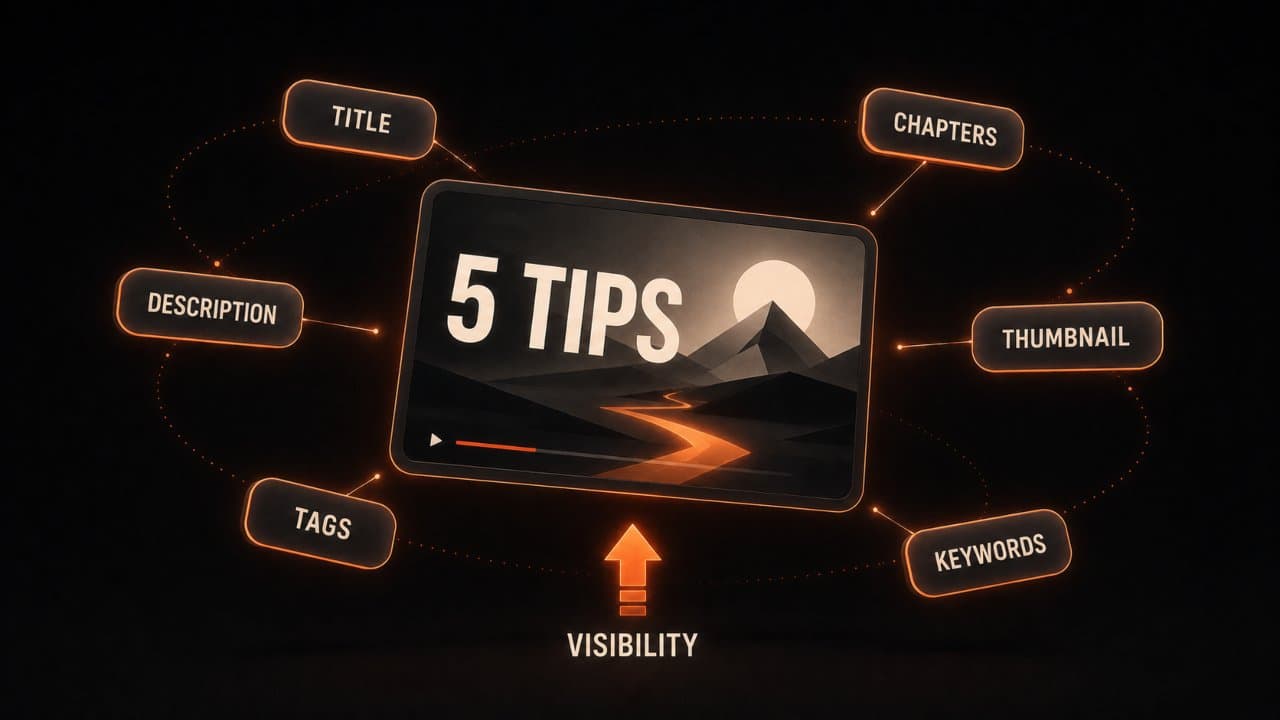
A great video with bad metadata gets zero views. A strong video SEO strategy is not optional.
Title. Include your primary keyword in the first 60 characters. Use numbers when possible. "5 Solar Panel Myths Debunked in 2026" performs better than "Things to Know About Solar Panels."
Description. Write at least 200 words. Include your primary keyword in the first two sentences. Add timestamps for key sections. Link to related videos on your channel.
Tags. Include your primary keyword, 2-3 variations, and your channel name. Tags matter less than they used to, but they still help YouTube understand your content.
Thumbnail. This is the single most important factor for click-through rate. Use high-contrast colors, large readable text (4-6 words max), and a single focal image. AI image generators can create thumbnails, but test different styles to find what works for your niche.
Chapters and timestamps. Add them to every video. They improve watch time by letting viewers jump to sections they care about, and they help YouTube understand your content structure.
Step 5: build a content production system
One video is a test. A channel is a system.
Batch creation. Set aside one day per week for production. Create 3-5 videos in a single session. AI tools make this realistic. With DeepReel, you can produce a video in 10-15 minutes once you have the workflow dialed in. That means 5 videos in about an hour.
Content calendar. Plan your topics 4-8 weeks ahead. Mix evergreen topics (always relevant) with trending topics (timely but shorter shelf life). Aim for 70% evergreen, 30% trending.
Publishing schedule. Consistency matters more than frequency. Two videos per week on a reliable schedule outperforms five videos one week and zero the next. YouTube's algorithm rewards channels that publish predictably.
Scripting pipeline. If you write your own scripts, batch those separately from video production. Write 5 scripts on Monday, produce 5 videos on Tuesday. If you use AI-generated scripts from prompts, you can combine scripting and production into one session.
Quality review process. Every video should go through a quick check before uploading. Watch the full video at 1.5x speed. Check for: visual mismatches (stock footage that does not match the narration), voiceover pacing issues, and factual errors in the script. This 5-minute review catches 90% of problems.
Thumbnail system. Create 3-5 thumbnail templates for your channel. Rotate between them. Each template should have a consistent color scheme and text placement. When you publish a new video, drop the topic text into a template and adjust the focal image. Thumbnails should take 5 minutes, not 30.
Here is what a realistic weekly schedule looks like for a faceless channel producing 3 videos per week:
Monday: research topics and write 3 prompts or scripts (1-2 hours). Tuesday: produce all 3 videos with AI and review them (1-1.5 hours). Wednesday: create thumbnails, write titles and descriptions, schedule uploads (45 minutes). Total weekly time: about 4 hours. That is manageable for a side project and leaves room for growth.
Content ideas for faceless AI YouTube channels
Evergreen content topics
These topics perform well month after month.
"How X works" explainers. How credit scores work. How the stock market works. How solar panels work. These get consistent search traffic and have long shelf lives.
Historical stories. "The rise and fall of Blockbuster." "How one engineer changed the internet." Story-driven content has strong retention rates.
Comparison and versus videos. "iPhone vs Android in 2026." "Renting vs buying a home." These match high-intent search queries and perform well for ad revenue.
Step-by-step tutorials. "How to start investing with $100." "How to set up a home network." Tutorial content builds subscriber loyalty because viewers return for more help.
Trending content topics
These topics spike and fade, but they drive rapid growth.
AI tool reviews and news. Every new AI launch is a video opportunity. The audience for AI content is growing fast and the CPM rates are strong.
Social media updates. Platform changes, algorithm shifts, new features. These get views quickly but have short shelf lives. You can repurpose these videos as Shorts, TikToks, or LinkedIn clips to squeeze more reach from each one.
Current events analysis. News commentary from your niche perspective. Finance channels cover market events. Tech channels cover product launches. Timing matters here. Publish within 24-48 hours of the event for maximum impact.
Seasonal content. Tax tips in March. Holiday shopping guides in November. Back-to-school content in August. Seasonal videos spike every year on the same schedule. Create them once and they earn views annually. You can update them each year with fresh data and republish.
Monetization strategies for faceless channels
Ad revenue and the YouTube Partner Program
To join the YouTube Partner Program, you need 1,000 subscribers and either 4,000 watch hours in the past 12 months or 10 million Shorts views in 90 days.
Faceless channels can reach these thresholds. The key is consistent publishing and targeting niches with strong search volume. Most channels that publish 2-3 times per week hit the 1,000 subscriber mark within 3-6 months.
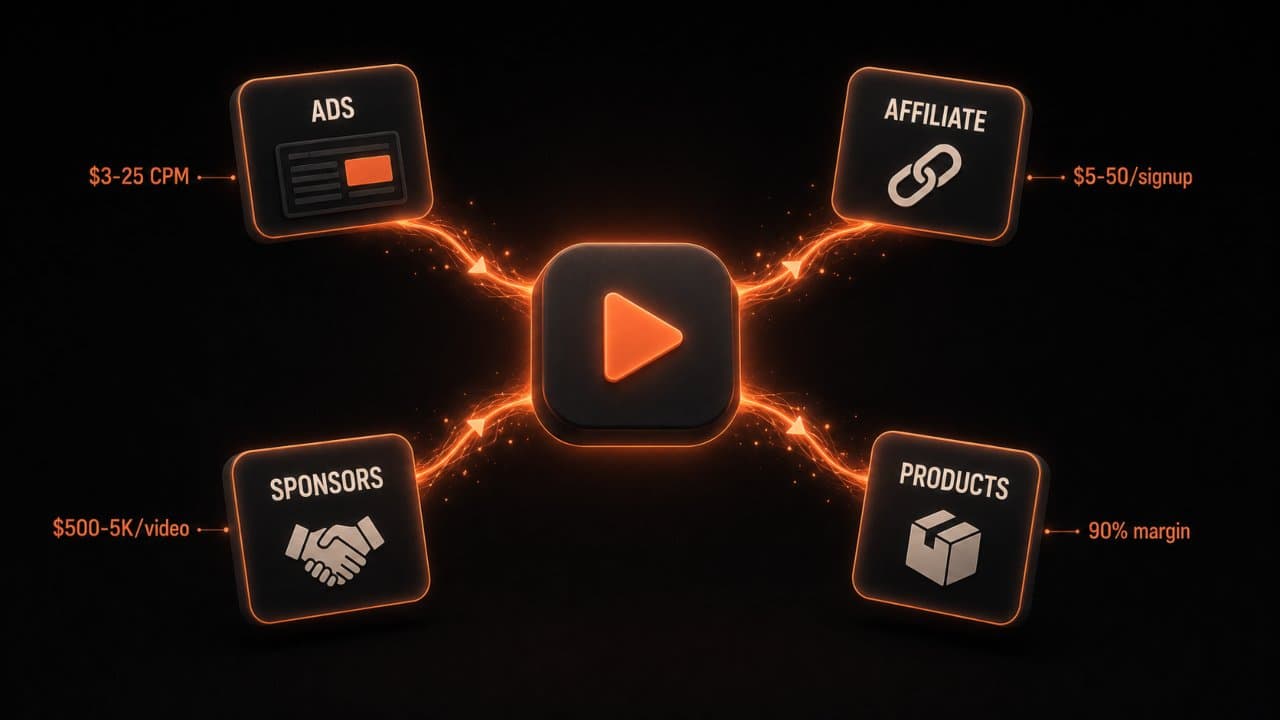
CPM rates vary dramatically by niche. Finance and investing channels often see $15-$25 CPM. Technology channels range from $8-$15. General entertainment runs $3-$7. Pick a niche with high CPM if ad revenue is your primary goal.
One important note: YouTube clarified in early 2026 that faceless channels are not banned. The platform targets low-effort, mass-produced content, not faceless content specifically. As long as your videos add genuine value and contain original commentary or research, they qualify for monetization, according to YouTube policy analysis from NexLev.
Beyond ads: affiliate, sponsorships, and products
Ad revenue is just the starting point.
Affiliate marketing. Review tools and products in your niche. Include affiliate links in video descriptions. A finance channel reviewing budgeting apps can earn $5-$50 per sign-up through affiliate programs. This income often exceeds ad revenue.
Sponsorships. Once you hit 10,000+ subscribers, brands will reach out. Faceless channels can run sponsored segments using the same b-roll and voiceover format as regular content. Sponsorship rates for niche channels range from $500 to $5,000 per video depending on audience size and engagement. You can also use an AI video ad maker to produce sponsored segments that match your channel's faceless style.
Digital products. Courses, templates, guides, and tools related to your niche. A faceless tech channel can sell a "complete home network setup guide" as a PDF. A finance channel can sell budgeting spreadsheets. Production cost is near zero. Margins are high.
Community membership. YouTube memberships or external platforms like Patreon let subscribers pay for exclusive content, early access, or community features. Faceless channels with strong audiences can generate $500-$5,000 per month from memberships alone.
The smartest faceless channel operators diversify early. Do not wait until you hit 100,000 subscribers to add affiliate links. Start with affiliates from video one. Add digital products once you understand what your audience needs. Layer in sponsorships as your numbers grow. Multiple revenue streams protect you from algorithm changes and CPM fluctuations.
FAQ
Can a faceless YouTube channel really be successful?
Yes. Multiple faceless channels have crossed 10 million subscribers. Many smaller channels earn $5,000-$20,000 per month without ever showing a face. Content quality and consistency matter far more than personal appearance. The key is choosing a strong niche, publishing regularly, and optimizing for search.
How many videos should I post per week?
Start with 2-3 per week. AI video tools make this realistic even as a solo creator. You can batch-produce a week's worth of videos in a single session using tools like DeepReel. More important than frequency is consistency. YouTube's algorithm rewards reliable publishing schedules. If 2 per week is sustainable, commit to that schedule.
Do faceless channels get monetized?
Yes, as long as the content is original and meets YouTube's community guidelines. YouTube clarified in 2026 that faceless content is acceptable for monetization. The platform targets low-effort mass-produced content, not the faceless format itself. If your videos contain original research, commentary, or educational value, they qualify. Adding AI-generated voiceover and visuals does not disqualify your content.
Wrap up
Starting a faceless YouTube channel in 2026 is more accessible than it has ever been. AI tools handle the production. You handle the strategy.
Pick a niche with strong search demand. Set up your channel with consistent branding. Create your first video with an AI tool in under 15 minutes. Optimize for YouTube SEO. Build a batch production system. Monetize through ads, affiliates, sponsorships, and digital products.
The barrier to entry is lower than ever. The barrier to success is still the same: consistency, quality, and patience. Most channels that fail do not fail because of bad content. They fail because the creator stopped publishing after 20 videos when the subscriber count was still low. The channels that succeed are the ones that kept going through that early growth phase.
Start with DeepReel and create your first faceless video today. You will have a finished video in minutes, and you will know immediately whether the AI-driven approach fits your content goals.