AI Video Ad Maker: Create High-Converting Ad Creative at Scale
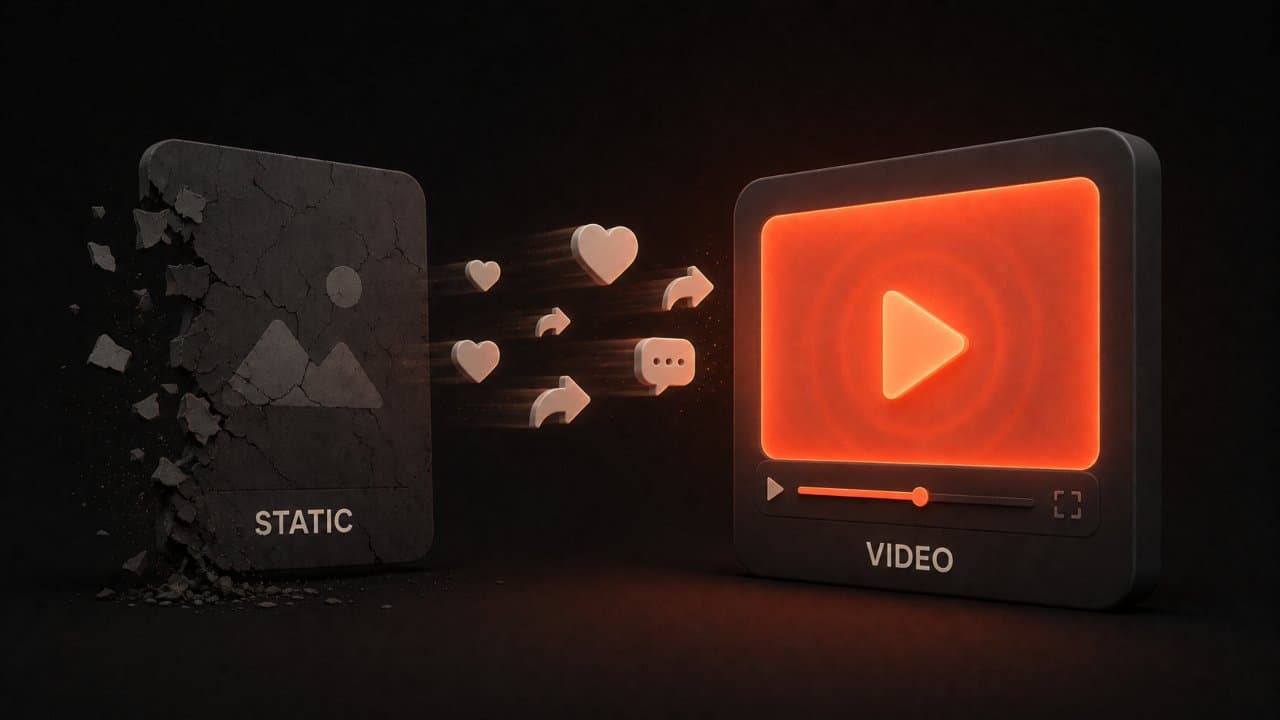
Your static ads are dying. Or at least, they're getting crushed by video.
Video ads get 62% higher engagement rates than static image ads. Short-form videos? They pull 2.7x more engagement than traditional formats. And yet, most businesses are still stuck spending thousands on agency creative or watching valuable ad time slip away with mediocre content.
Here's the thing: you don't have to be a Hollywood production studio to make ads that convert. An AI video ad maker can change that.
In this guide, I'll show you exactly how to use AI video ad generation tools to create winning ad creative without the six-figure budget. You'll learn what makes video ads work, which tools are worth your time, and how to A/B test your way to higher conversion rates.
Why video ads outperform static creative
Static ads had a good run. Image posts still work for certain campaigns, especially on Instagram where save rates matter.
But let's be real: video wins on engagement.
The numbers back this up. Across Facebook, Instagram, TikTok, and LinkedIn, video content generates 23% higher engagement than static images. On Instagram Reels alone, you're looking at roughly 2x the reach and impressions compared to static photos. LinkedIn users are 20x more likely to share video than any other post type.
What about short-form video specifically? The format absolutely dominates right now. Video-based ads deliver 58% higher click-through rates, and those clicks cost up to 480% less than static ad clicks.
Here's why: human brains process video 60,000x faster than text. When someone scrolls past your ad, video stops them. It tells a story. It demonstrates your product. It creates emotion in seconds.
And there's real business impact. Video ads improve brand recall by 67%. That's hard to ignore. You're not just getting clicks. You're getting remembered.
The catch? Producing quality video used to require hiring an agency, investing in equipment, or spending 40 hours per project in editing software. That kept most businesses stuck with static ads.
Enter: AI video ad makers.
What is an AI video ad maker?
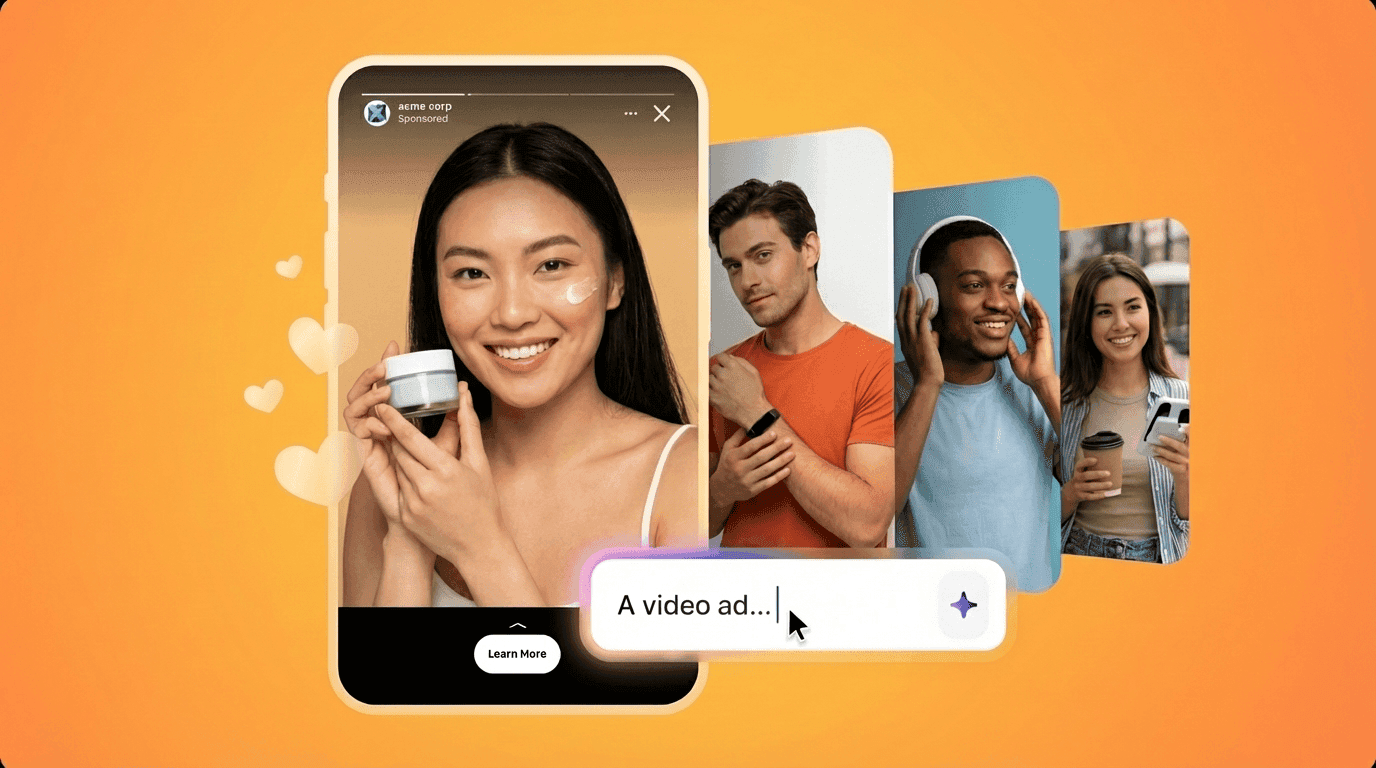
An AI video ad maker is software that generates polished video ads from text, images, or existing content. You describe what you want, upload some assets, pick a format, and the tool builds a finished, ready-to-post video ad in minutes.
Most modern AI video generators use text-to-video models, meaning you can literally type a description and get a video back. If you're new to writing effective prompts for AI video tools, our AI video prompts guide covers what works. Others let you upload images, pick background music, add voiceovers, and arrange everything on a timeline.
The best part? No design experience required.
These tools handle:
- Scene generation and transitions
- Music and sound effects
- Text overlays and captions
- Voiceovers (AI-generated or uploaded)
- Aspect ratio adjustments for any platform
- Batch creation for multiple variations
A single tool can pump out 10, 50, or 100 variations of the same ad concept. That's the power of scale. You're no longer limited to one creative per campaign.
Top AI video ad generators for your business
You've got options. Here are the best tools for creating high-converting video ads:
DeepReel
Built specifically for high-volume ad creative, DeepReel excels at generating ads for paid social. You can create AI-powered videos for Facebook, Instagram, TikTok, and YouTube in seconds. The interface is clean, the templates are designed for ads, and pricing is stupidly affordable.
Pricing: $5/month (10 videos), $25/month (100 videos), $30/month (unlimited).
Creatify
Creatify focuses on e-commerce and conversion. Upload your product details, let the AI write the script, and get back polished ads. It's built for sellers who want to test creative variations fast.
Pencil
Pencil generates short-form video ads from your product images and copy. If you're running performance marketing campaigns, Pencil's templates are built for conversion-focused creatives.
Predis.ai
This tool is strong on Instagram and TikTok. You get AI copywriting, auto captions, trending music selection, and one-click posting to multiple platforms. Great for scale.
InVideo
InVideo is the Swiss Army knife of video. It does ads, explainers, tutorials, and everything between. If you need flexibility, it's worth the investment.
Each tool has different strengths. DeepReel wins on speed and affordability. Creatify excels if you sell physical products. InVideo gives you the most creative control. Pick based on your platform focus and budget.
How much do AI video ad makers cost vs. agencies?
This is where the economics get interesting.
A typical digital agency charges $2,000 to $10,000 per video ad. That's not unusual. Some charge more. If you want 10 variations? You're looking at $20K-100K easily.
A single AI-generated video costs you less than a cup of coffee with DeepReel's $5/month plan.
Let me spell out the math:
- Agency video: $5,000
- 10 agency videos: $50,000
- DeepReel unlimited: $30/month ($360/year)
You're not just saving money. You're getting speed. An agency might take 2-3 weeks. DeepReel delivers videos in minutes.
There's a trade-off. AI videos won't look like a $50K cinematic production. But they don't need to. You need ads that convert. And AI videos convert.
Data from across the industry shows that AI-generated ad creative performs similarly to professional creative in A/B tests. In many cases, it outperforms because you can test 50 variations instead of 2.
Creating video ads for different platforms
Video specs vary wildly across platforms. An ad that crushes it on TikTok will look like garbage on YouTube. Your tool needs to handle the differences.
Here's what matters:
Facebook/Instagram
- Aspect ratio: 16:9, 1:1, or 9:16
- Duration: 15 seconds is ideal (works up to 2 minutes)
- File format: MP4 preferred
- Captions: Always add them. 85% of video is watched muted.
TikTok
- Aspect ratio: 9:16 (vertical full-screen)
- Duration: 15-30 seconds is sweet spot
- Captions: Built-in caption format works best
- Music: Trending audio helps with algorithm
YouTube
- Aspect ratio: 16:9
- Duration: Aim for under 30 seconds (pre-roll ads), or 3-5 minutes (in-stream)
- Captions: Helps with accessibility and engagement
- File format: MOV or MP4
- Aspect ratio: 1:1 or 16:9
- Duration: 15-60 seconds
- Captions: Recommended for muted scroll views
- Format: Keep it professional
The best AI tools auto-adjust. You create once, the tool renders multiple formats. That saves hours.
Creative frameworks that drive conversions
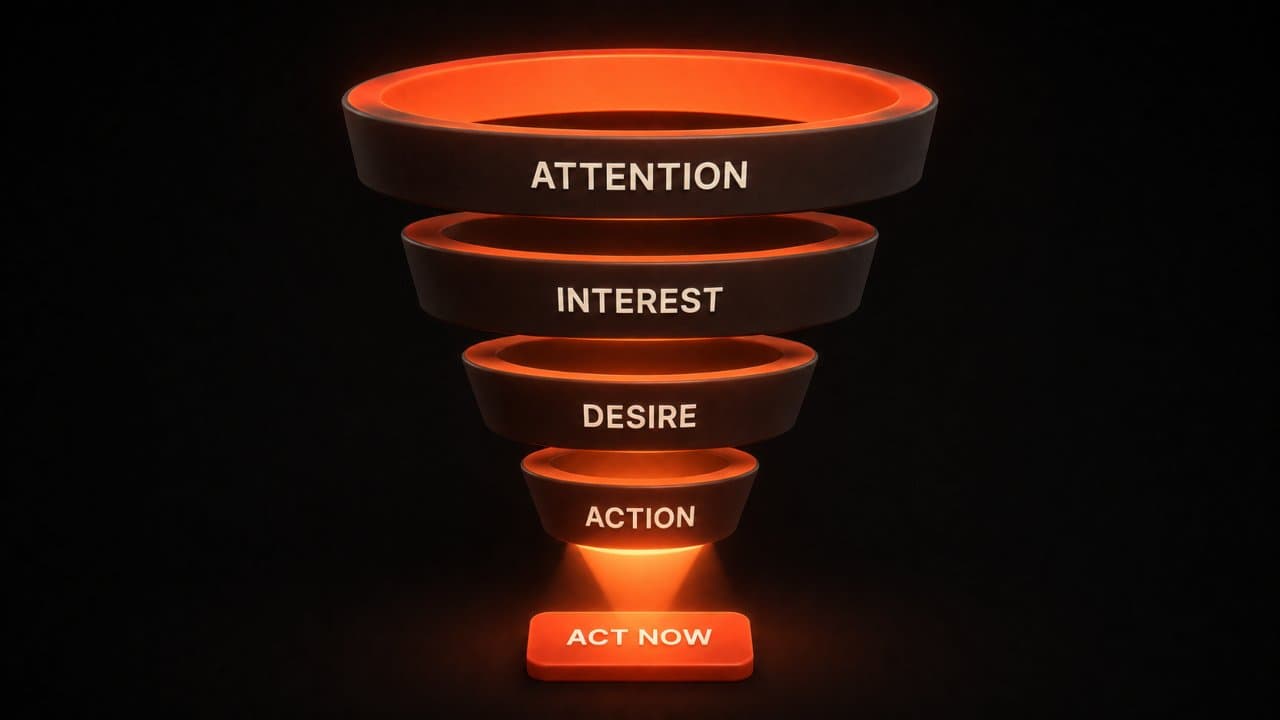
Video ad performance varies widely. The difference between a 2% conversion rate and 8% conversion rate often comes down to creative structure.
Use these frameworks:
AIDA (attention, interest, desire, action)
This is the oldest sales framework for a reason.
Attention: Hook them in the first second. A problem they recognize, a surprising fact, or a benefit they didn't expect.
Interest: Show why this matters. Build context. Paint the problem picture.
Desire: Display the solution. Show the transformation. Demonstrate the product working.
Action: Tell them what to do. "Shop now." "Download the app." "Learn more." Make it obvious.
A typical AIDA ad flows like: "Your ads are underperforming [attention] because you're not testing enough variations [interest] but AI makes testing 50 versions easy [desire] so try DeepReel free [action]."
PAS (problem, agitation, solution)
This one moves faster.
Problem: Identify the struggle.
Agitation: Make them feel it. Why is this problem costing them money, time, or stress?
Solution: Here's the answer.
Example: "You're manually editing video ads [problem], wasting 20 hours per month [agitation], when AI can do it in minutes [solution]."
The comparison frame
Show before/after or old way/new way.
"Old way: hire an agency, wait 3 weeks, pay $5K. New way: AI, 5 minutes, $5/month."
This works because humans love contrast. You're making the choice obvious.
These frameworks work across all platforms. TikTok, Instagram, Facebook—the structure remains. What changes is the pacing. TikTok is faster. YouTube has more time to breathe.
A/B testing with AI video ad makers
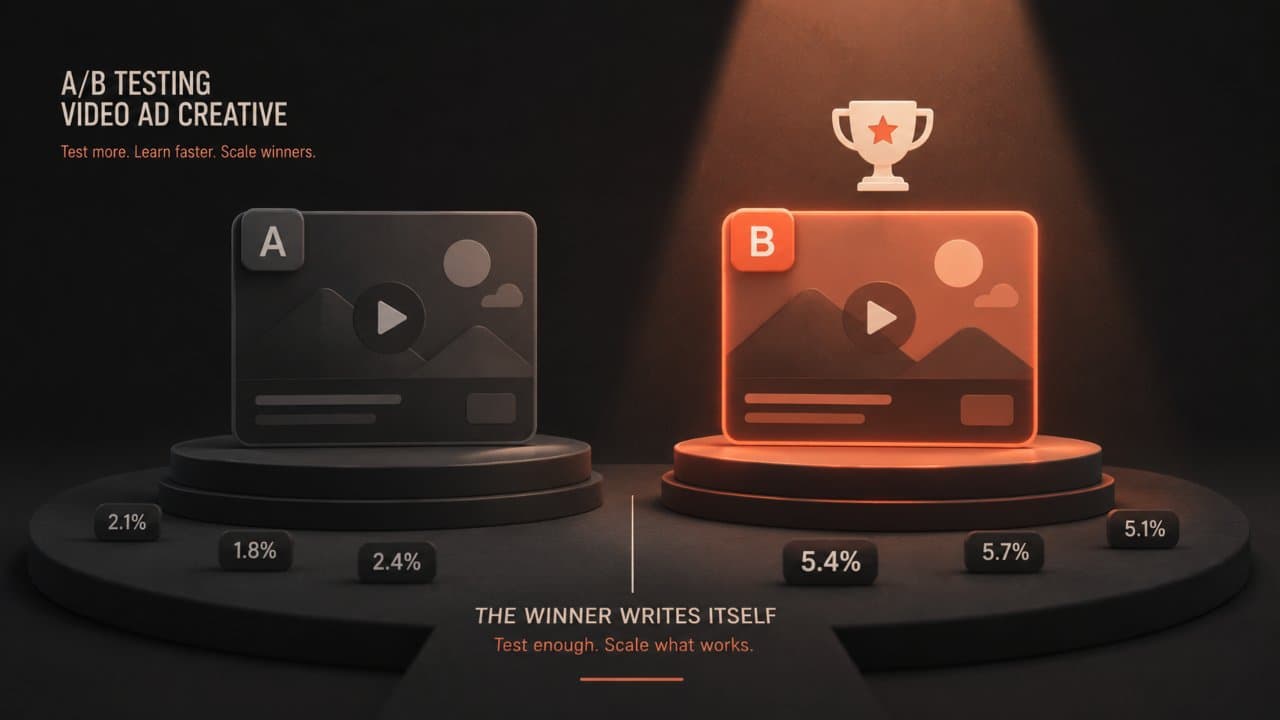
Here's where AI video makers shine: you can finally test at scale.
Old creative process:
- Create ad concept
- Design/film it (2 weeks, $3K)
- Run it for 3 days
- See 1.2% conversion rate
- Pause it
New process with AI:
- Create ad concept
- Generate 50 variations in 30 minutes ($1)
- Run all 50 for 2 days
- 47 underperform, but 3 hit 5%+ conversion rates
- Double down on winners
The goal is to find your top 2-3 creative performers, then scale them. If you're running personalized video campaigns at scale, this testing approach becomes even more powerful.
Test these variables:
- Hook (problem-focused vs. benefit-focused)
- Tone (funny, serious, inspirational)
- Length (10 seconds vs. 30 seconds)
- Voiceover style (energetic, calm, storytelling)
- Product demo vs. results display
- Different target audiences in copy
Run each test for at least 100 clicks or 2-3 days (whichever comes first). Let the data speak.
You'll quickly see patterns. Maybe your audience responds to customer testimonials over product shots. Or maybe humor wins. These insights compound. After 3-4 rounds of testing, you'll know your audience cold.
And here's the kicker: you'll have built a library of winning creatives. Reuse them. Refresh them. Rotate them throughout the year.
Step-by-step: creating your first AI video ad
Let's walk through creating an ad with an AI video maker. We'll use DeepReel as the example, but the process is similar across most tools.
Step 1: Define Your Offer and Hook
Before you touch the tool, know your story. What's the one sentence hook?
Example: "Create 100 video ads in an afternoon with AI."
Step 2: Choose Your Platform and Format
Are you targeting TikTok? Instagram Reels? YouTube pre-roll? This determines aspect ratio and length.
Step 3: Upload Assets
Gather product images, your logo, any existing footage. Some tools let you type a text prompt instead.
Step 4: Write Your Copy
Most tools have templates. Fill in headline, body, CTA. Keep it tight. You have 3-5 seconds max for the hook. If you need help with scripts, our AI video script generator can create first drafts you can plug straight into your ad tool.
Headline example: "Stop wasting time on boring ads." Body: "AI makes testing 50 creative variations in 30 minutes." CTA: "Try free."
Step 5: Select Music and Voiceover
Pick a music track that matches your tone. AI voiceover or upload your own? Most tools let you choose.
Step 6: Review and Generate
Hit generate. The tool stitches everything together. Review the output. Make tweaks if needed (most tools let you edit).
Step 7: Download and Post
Grab the video file, upload to your ad platform, set your targeting and budget.
Step 8: Monitor Performance
Let it run. Check performance after 2 days. Conversion rate too low? Kill it, tweak the creative, and test again.
Total time invested: 45 minutes to launch. A month ago, that would've taken a week.
The cost comparison: agency vs. AI video ad maker
Let's break down a real scenario.
You need 50 video ad variations for a launch campaign. You're testing Facebook, Instagram, and TikTok.
Agency Route
- Initial consultation: 4 hours (included)
- Copywriting: 8 hours @ $150/hr = $1,200
- Creative direction: 4 hours @ $150/hr = $600
- Filming/design: 20 hours @ $150/hr = $3,000
- Editing: 30 hours @ $150/hr = $4,500
- Revisions: 8 hours @ $150/hr = $1,200
- Total: $10,500 for 50 videos
- Timeline: 4-6 weeks
AI Tool Route (DeepReel)
- Monthly subscription: $30 (unlimited videos)
- Your time: 10 hours (planning, copy, uploads, testing)
- Total: $30 + (10 hours @ your hourly rate)
- Timeline: 1 week
If you value your time at $50/hour, you're at $30 + $500 = $530 total. Compare that to $10,500.
Even if you value your time at $150/hour, you're at $30 + $1,500 = $1,530. Still 86% cheaper.
That math is why AI video makers are disrupting the entire creative production industry.
Platform-specific tips for ad success
Different platforms have different winning formulas. Master these and you'll see your conversion rates jump.
Facebook and Instagram
- First frame matters most. Make it stop-the-scroll worthy.
- Text overlay helps, especially for mobile viewers.
- Captions are mandatory (most people watch muted).
- 15-30 second range performs best.
- Testimonials and social proof crush it here.
TikTok
- Trend-jacking works. Use trending sounds and formats.
- Authenticity beats polish. Over-produced ads flop.
- Jump into the action immediately. No intro.
- 9-16 vertical format is non-negotiable.
- Humor, surprising facts, or relatable problems win.
YouTube
- YouTube viewers are less skeptical than other platforms. Educational content works.
- 15 second pre-roll ads need a hook in frame 1. For more on making YouTube-specific content, we covered the best AI video makers for YouTube in depth.
- Longer videos (3-5 minutes) can tell a deeper story. If you're running a faceless YouTube channel, AI-generated ads work naturally since you're not relying on on-camera talent.
- Direct product demos work better than lifestyle shots.
- CTAs should be prominent at the end.
- Professional, educational, or inspirational content resonates.
- Avoid hard selling. Share insights instead.
- Testimonials from business leaders crush it.
- 16:9 aspect ratio preferred.
- You have time to build context (15-30 seconds minimum).
Our LinkedIn video ads guide covers targeting and creative strategy for this platform in more detail.
The platform influences creative, copy, and pacing. For social media managers juggling multiple channels, the right AI tool handles these format differences automatically.
Measuring success: key metrics to track
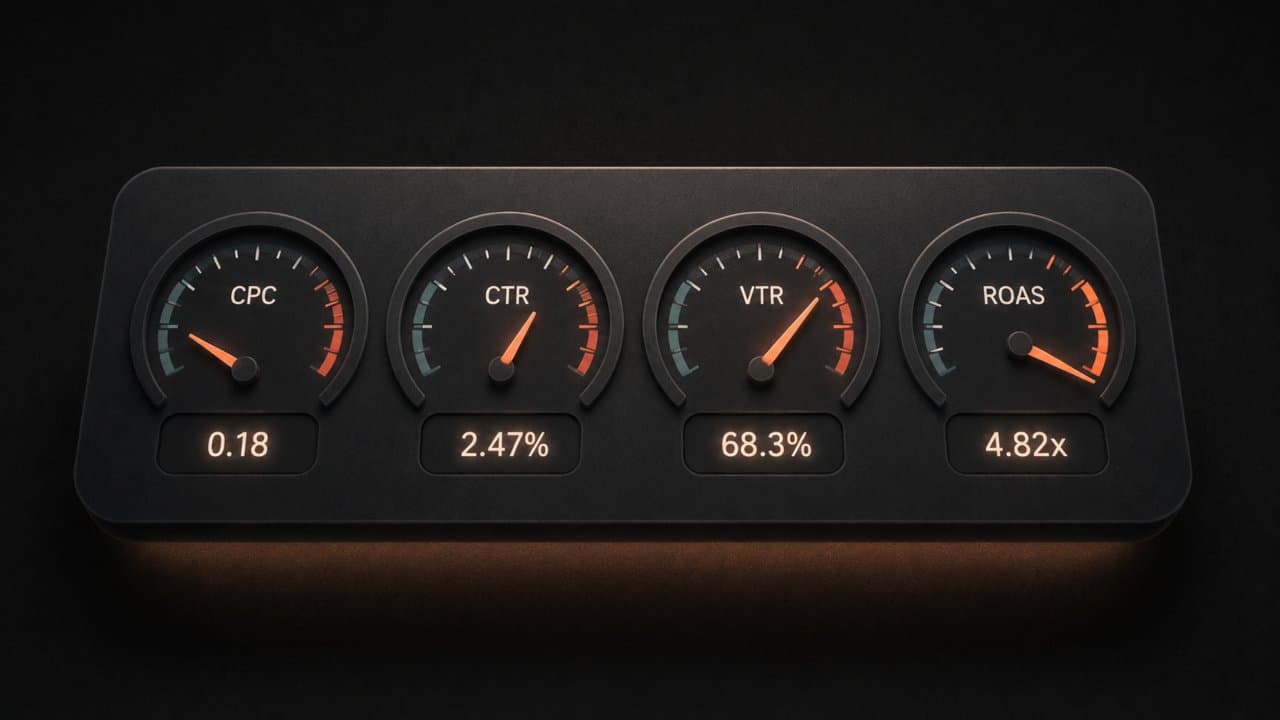
You built the ads. Now you need to know if they work.
Track these metrics:
Conversion Rate: Clicks divided by impressions. This is your north star. Aim for 1-3% for cold audiences, 3-8% for warm audiences. AI video ads typically hit 2-4% on first test.
Cost Per Click (CPC): Total spent divided by clicks. Lower is better, but it varies by platform and audience. Facebook CPC averages $0.50-$2. TikTok averages $0.25-$1.
View-Through Rate (VTR): For video ads, how many people watched your video (at least 2 seconds). 50%+ is solid. 70%+ is excellent.
Engagement Rate: Likes, comments, shares divided by impressions. Video ads should hit 2-5%. Higher engagement signals better creative.
Return on Ad Spend (ROAS): Revenue divided by ad spend. Anything above 3:1 is profitable. 5:1+ is exceptional.
Track these in your ad platform's native dashboard. Most tools have built-in analytics. Understanding how video impacts your broader search visibility can also help — our video SEO strategy guide explains how video content drives organic traffic alongside paid.
What's important is tracking trends over time, not obsessing over single metrics. One ad might have high CTR but low conversion rate. Another might convert well but reach fewer people. Your job is finding the balance.
Some brands get hung up on vanity metrics like views or clicks. Don't fall into that trap. Only care about metrics tied to your actual business goal: sales, leads, signups, or whatever you're optimizing for.
Set up conversion tracking before you launch. Most ad platforms (Facebook, TikTok, Google) let you install a pixel that tracks when someone completes an action on your website. That pixel is your connection between ad spend and real results.
Common mistakes to avoid
You don't have to learn these lessons the hard way.
Mistake 1: Skipping the Hook You have 3 seconds. If your first frame doesn't grab attention, you've lost. Every frame matters.
Mistake 2: Too Much Text Captions are good. Full paragraph text overlays are terrible. Keep on-screen text to 3-5 words max.
Mistake 3: No Clear CTA Don't assume people know what to do. "Shop now." "Download." "Learn more." Make it crystal.
Mistake 4: Ignoring Platform Specs A 16:9 video doesn't look good on TikTok's 9:16 feed. Render for each platform.
Mistake 5: One-and-Done Testing You created one video and expect it to work forever. Platforms throttle performance over time. Always have fresh creatives in rotation.
Mistake 6: Not Testing Headlines Copy is 40% of creative performance. Your AI tool lets you change headlines easily. Test 5 versions.
Mistake 7: Forgetting About Captions 85% of video is watched without sound. Captions aren't optional. They're mandatory. Here's how to add subtitles to your videos with AI in minutes.
Mistake 8: Using Low-Quality Source Images Your AI video is only as good as your source material. Blurry product photos or pixelated logos will show in the final video. Spend 10 minutes getting the best images before generating.
Mistake 9: Skipping the A/B Test Period Your first creative won't be perfect. Maybe it will be. But you won't know unless you test against other variations. Always run multiple versions simultaneously.
FAQ
Will AI videos look cheap or obvious?
Modern AI video generators produce polished, professional-looking ads. They don't look like generic templates. In blind tests, reviewers can't consistently tell AI videos from professionally produced ones. The key is using good source images and clear copy.
Can AI replace my agency?
For most video ad creation, yes. For brand-building film projects, not yet. AI excels at generating high-volume, performance marketing creatives. It's not great at multi-week narrative storytelling. Use it for ads. Use agencies for brand films.
How much should I spend on video ads?
Start small. Spend $20-50 per variation for 3-5 days. If you see traction (>2% conversion rate), scale to $100-300/day. Most profitable campaigns are running on $200-1,000/day ad spend once you've found winners.
Wrap up
Video ads are outperforming static creative by wide margins. AI video ad makers give you the ability to test at scale without the $50K agency budget.
You now know the frameworks that work, the platforms that matter, and the tools that handle the production. Start with one test campaign this week using DeepReel. Generate a few variations, run them for 3-5 days, and let the data tell you what works. For a broader look at video across all your channels, see our AI video marketing strategy guide.