What is an AI video agent? the future of video creation
You've probably heard people throw around the term "AI video agent" like it's the same thing as an AI video generator. It's not.
An AI video agent is fundamentally different from the tools you've used before. It's not just a generator. It's not just an editor. It's something new.
Let me explain what that means and why it matters for your video production.
AI agents vs tools: understanding the difference
Video creation tools have evolved in three distinct waves.
The first wave was editing software. You opened Adobe Premiere or Final Cut Pro, and you had to do everything yourself. You imported clips, cut them, added transitions, colored them, mixed audio. The tool was just a canvas. You were the creator.
The second wave was video generators. Tools like these could take a simple prompt and auto-generate an entire video. But here's the thing: they made decisions for you without asking. You gave them your topic, and they picked the style, the pacing, the narrator, the music. You reviewed it afterward. It was fast, but it often felt generic because the tool didn't know your brand or your audience. (We compared the best AI video generators for beginners if you want to see how they stack up today.)
The third wave is what we're in now: AI video agents.
An AI agent is different because it understands what you're trying to do and makes smart decisions as it works. It doesn't just process input and dump out output. It asks questions. It learns your preferences. It adapts to what you actually need.
Think of it this way: a tool obeys instructions. An agent understands context and makes recommendations.
According to McKinsey's research on AI in marketing, the difference between a simple automation system and an intelligent agent comes down to autonomy and adaptability. An agent can work independently, making decisions that align with your goals without constant input. It learns from feedback.
That's what separates agents from generators.
How AI video agents work
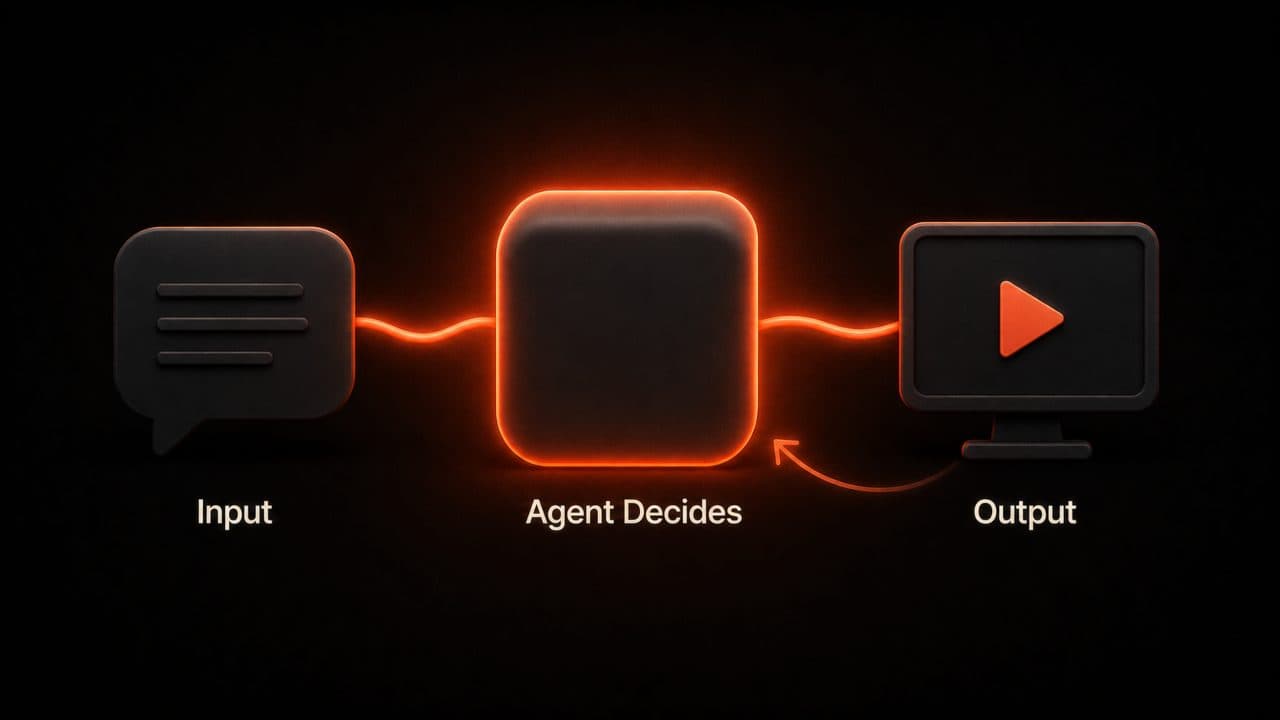
To understand how an agent works, you need to know three things: input, decision-making, and human oversight.
Input is where it starts. You don't need to be detailed. You might say "I need a 60-second video about our new product for LinkedIn." That's all. The agent understands that LinkedIn videos perform better at 30-60 seconds, that vertical format works best, that captions help with sound-off viewing. It starts making decisions immediately based on your input.
Autonomous decisions happen next. The agent decides what footage style to use (stock footage, generated visuals, or a mix). It picks a narrator. It creates a script that matches your topic and timeframe, similar to what an AI scriptwriting tool does, but integrated into a single workflow. It selects music that fits the mood. It plans the cuts and pacing. All of this happens because the agent was trained to know what works.
But here's where agents differ from simple generators: it's not done yet.
Human-in-the-loop is the critical piece. You review what the agent created. You see the script. You watch the video. If something's off, you give feedback. The agent adjusts. You might say "make the narrator slower" or "add more product shots" or "change the tone to feel more casual." The agent incorporates that feedback and regenerates just the parts that need to change.
This loop is what makes an agent smarter than a generator. Every interaction teaches it more about what you want.
At DeepReel, this is exactly how the platform works. You describe what you need. The agent builds it. You review it. You tweak it. The agent learns your preferences over time, so the next video you make is even closer to what you want without extra effort from you.
What AI video agents can do today
The capabilities of modern video agents are worth knowing.
Full production from a single input. You tell the agent you need a 90-second explainer video about your software. It handles script writing, visual generation (or selection from stock footage), voiceover narration, background music, color grading, pacing, and export. You don't touch any of those steps individually. The agent owns the entire workflow.
Content-aware visuals. Unlike simple generators that just grab random stock footage, modern agents understand what visuals match your script. If your script talks about "growth," the agent selects or generates visuals that communicate growth. If it mentions "collaboration," it finds or creates visuals that show people working together. This consistency is harder than it sounds, and it's what separates good agents from average ones.
Multi-format output. You create one video. The agent outputs versions for YouTube (16:9), Instagram (9:16), TikTok (9:16), LinkedIn (1:1). Each version is reformatted for that platform's requirements. Text overlays are adjusted. Pacing might change. You don't do any of this manually.
Voice cloning. Some agents can clone your voice from a short sample (as little as 30 seconds) and then use that voice for narration. This means your videos sound like you, even when you're not in a studio recording. For founders or thought leaders, this matters because your videos are instantly recognizable.
Multi-language support. Record your script in English. The agent translates it and regenerates the video in Spanish, French, German, and Mandarin. The voiceover changes. Subtitles adjust. You just doubled or tripled your audience reach without making new videos.
Customizable brand elements. You upload your brand colors, fonts, logo, and style preferences once. Every video the agent creates uses those elements automatically. This is what separates professional content from DIY content.
None of these features are theoretical. They're available right now on platforms like DeepReel. The question is whether you're using them.
The speed advantage
Let's be concrete about this.
In 2015, a professional video producer could make maybe 1-2 videos per week if they had all the footage and scripts ready. That's about 50-100 videos per year.
In 2024, someone using a modern AI video agent can make 5-10 videos per day. That's 1,500-3,000 videos per year. The same person. Different tools.
You don't need to be a video expert to make videos anymore. You need to know what message you want to send. The agent handles the rest.
This is why video production is shifting. It's not that video became more important. Video was already important. It's that the bottleneck, skill and time, disappeared.
Why this matters right now
Video content gets 10x more engagement than text or static images on social media, according to Wistia's research on video engagement. But most businesses don't make much video content because it's hard and slow.
AI video agents remove that friction. If you want a framework for putting this into practice, our AI video marketing strategy guide lays out how to build a video program around these tools.
Your competitors who start using agents now will have a clear advantage. They'll be making 10 videos while you're making 1, and their audience, messaging, and brand presence will reflect that volume.
If you've been avoiding video because it seemed too hard, this is your moment. The tools have caught up. You can make professional videos without being a professional videographer.
The limitations are still real
I want to be honest about what agents can't do yet.
They still sometimes pick generic stock footage when your brand needs something specific. You might need to override their choice.
They can't film live events or interviews for you. If you need footage of a real person or a real moment, you still have to capture that yourself.
They sometimes struggle with extremely specific industry jargon or technical concepts. If your script uses specialized terms, you need to review it carefully.
And they work best when you give them clear direction. Vague requests produce vague results. "Make a video about our company" is too broad. "Make a 60-second LinkedIn video about why our software saves engineers 5 hours per week" is specific enough for an agent to work with.
These aren't deal-breakers. They're just realistic limitations to know about.
What comes next
Agents are getting smarter. The AI video trends reshaping 2026 point to improvements in:
- Better understanding of brand voice and personality
- More sophisticated music matching that goes beyond mood to match pacing
- Improved script writing that sounds more natural (less robot-like)
- Better knowledge of platform-specific best practices for engagement
The trajectory is clear. Agents are getting more autonomous. They're making better decisions. They need less human correction.
In another year or two, you might give an agent your brand guidelines and monthly business update, and it will generate your entire content calendar for you. 30 videos, fully formatted for each platform, all automatically.
We're not there yet. But we're close.
Why agents beat generators at scale
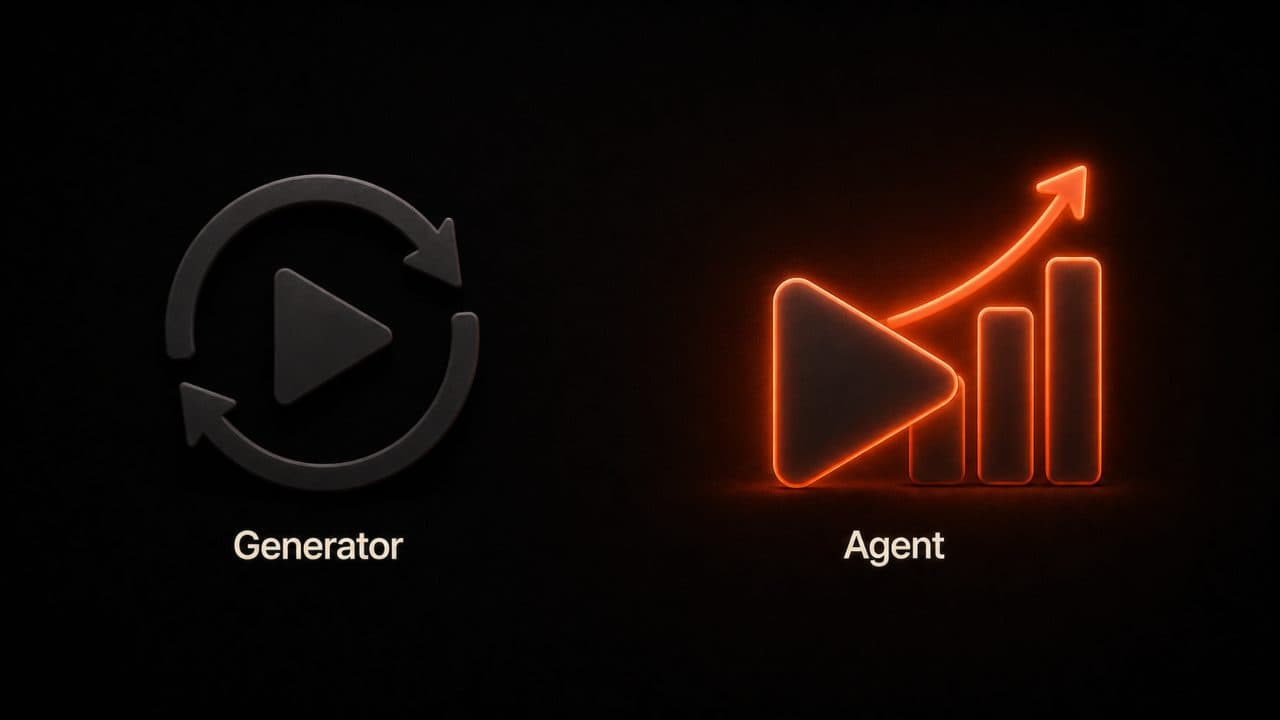
This is the thing most people miss about agents versus generators.
With a generator, you make one video, and if it's 60% right, you either accept it or start over. Starting over means waiting another 5 minutes for generation. That's not terrible for one video. But if you make 20 videos, and each one needs one regeneration, that's 100 extra minutes of waiting.
With an agent, you make one video, and if it's 75% right, you give feedback. The agent regenerates just the script, or just the visuals, or just the voiceover. That takes 2 minutes. You're done.
Multiply that across 20 videos and you save hours.
More importantly, agents learn. Your third video with an agent is better than your first because the agent has feedback from your first two. Your tenth video is even better. Generators don't learn. Every video is made from scratch, no context.
This is why agents are the future. They get better as you use them. They become more aligned with your brand and your preferences. Over time, they need less correction from you.
The agent mindset
Using an AI video agent requires a shift in how you think about video creation.
You're not controlling every detail anymore. You're steering. You set the direction. You review the output. You give feedback. The agent does the labor.
This is uncomfortable for people who are used to controlling everything. But it's also liberating. You spend your time on strategy and messaging, not on technical execution.
The best creators I've seen with these tools aren't the ones who try to control every frame. They're the ones who trust the agent to do its job, review the output honestly, and give clear feedback when something's off.
If you can do that, you can scale your video production to levels you never thought were possible.
FAQ
Can an AI video agent replace a professional videographer?
For most business video needs like social media content, product demos, training videos, presentations, yes, an AI agent can do 80% of what a professional videographer does. What it can't replace is creative direction, brand storytelling that goes beyond features, or the polish of shot composition for high-budget campaigns. For standard business content, agents are already replacing videographers.
Do I need technical skills to use an AI video agent?
No. If you can write a clear sentence describing what you need, you can use a modern video agent. You don't need to know about codecs, frame rates, color spaces, or any technical video stuff. The agent handles it. We wrote a full guide on creating AI videos without editing skills if you want a step-by-step walkthrough.
How long does it take to generate a video?
Most AI agents generate a full video in 2-5 minutes from input to first draft. Regenerating after feedback takes another 2-5 minutes. Export and final formatting might add another minute. So you're looking at 5-10 minutes total from "I want a video" to "video is ready."
Wrap up
An AI video agent is not just a faster editor or a smarter generator. It's a different kind of tool that understands what you're trying to accomplish and makes smart decisions as it works. If you've been hesitant about video because of the skill barrier, try DeepReel starting at $5/month and see how the agent workflow compares to what you've used before.