5 AI video trends reshaping marketing in 2026
You're watching your marketing budget shrink while your competitors seem to do more with less. The difference? They're using AI video, and the trends are moving fast.
I've spent months tracking how AI is changing video marketing, and the patterns are clear. Here are five trends that will define 2026. These aren't predictions. These are already happening.
Trend 1: AI video agents replace point solutions
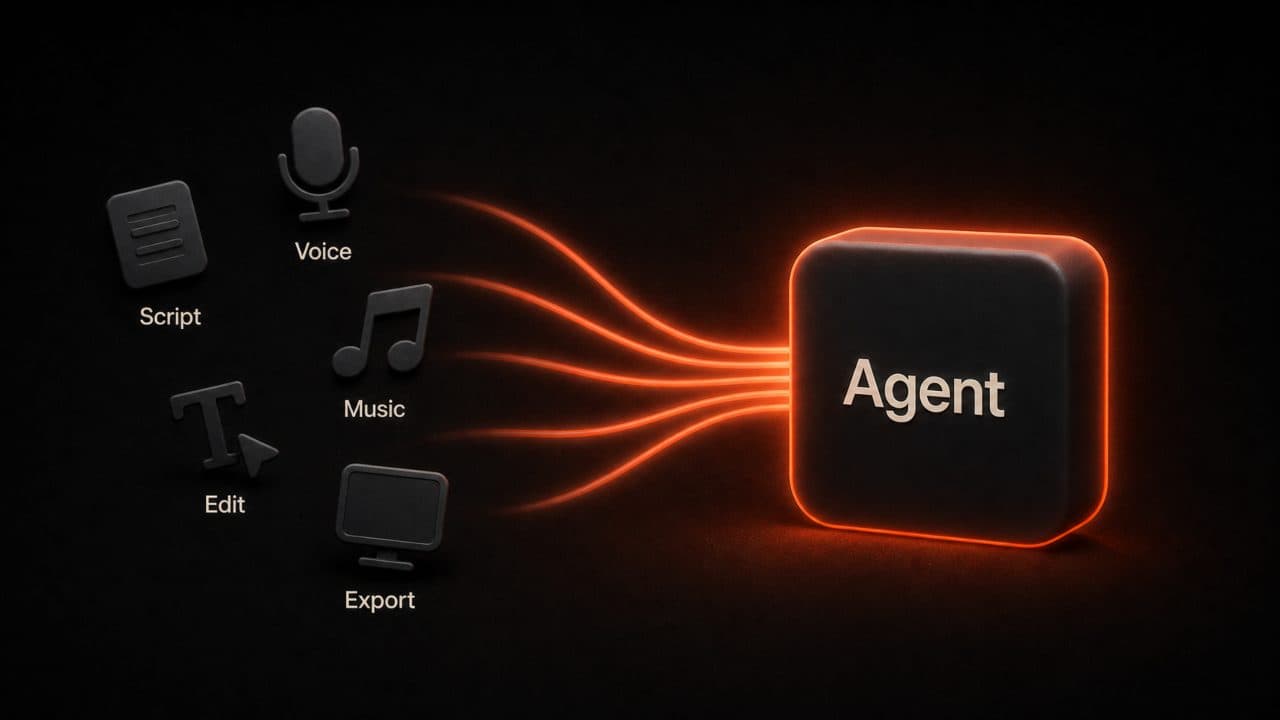
Last year, marketers used ten different tools. One for scripting. One for voiceovers. One for editing. One for subtitles. One for backgrounds. One for music. One for uploading to YouTube. It was chaos.
This year, that's changing. AI video agents are all-in-one platforms that handle multiple steps in one interface. You go from idea to finished video without switching between tools. No more context switching. No more version control nightmares. No more exporting files and importing them somewhere else.
DeepReel, HeyGen, and similar platforms now let you write a prompt, generate video, edit it, add captions, change music, and publish in one place. Everything you need is there.
This trend will accelerate through 2026 because marketers hate tool sprawl. When you're managing 50 videos per month, switching between five tools kills productivity. You lose time. You lose consistency. You lose sanity.
The platforms that win in 2026 will be the ones that do everything you need. Not the specialist tools. Not the "best at one thing" tools. The ones that handle the entire workflow.
Trend 2: Content becomes format-agnostic
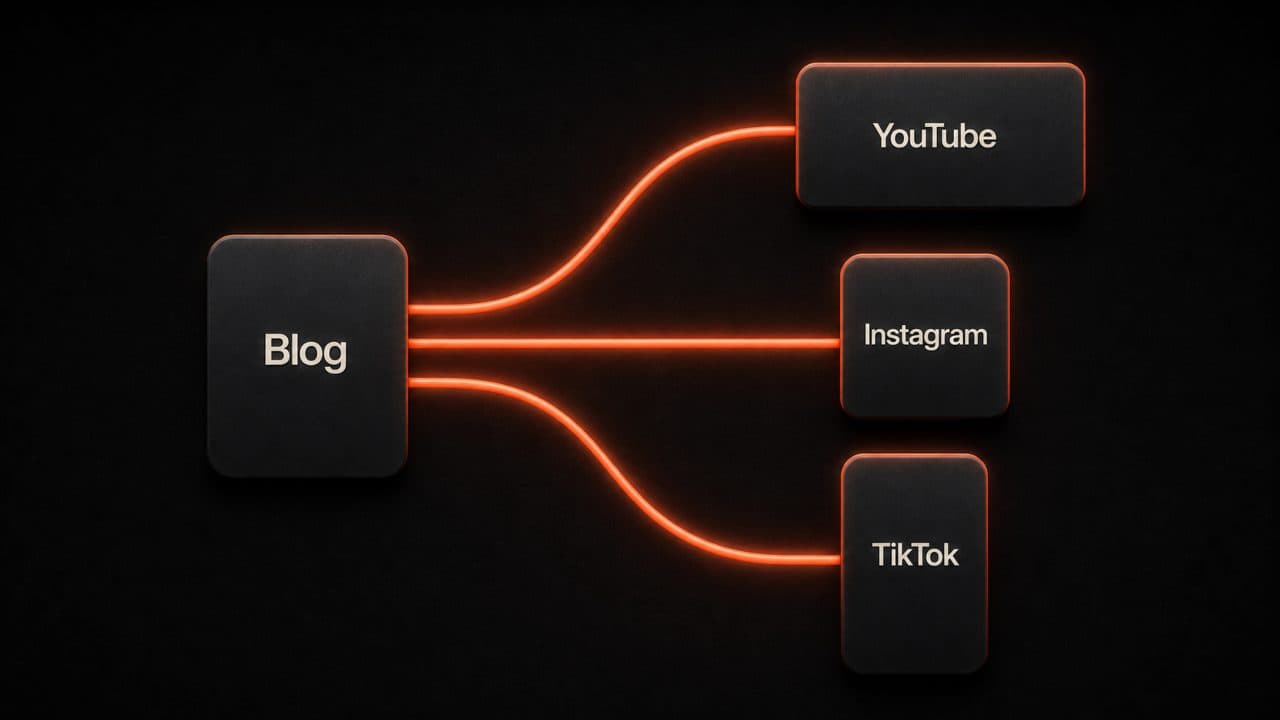
You write one blog post. From that, you want a 2-minute YouTube video, a 30-second TikTok, a 1-minute LinkedIn carousel video, and three Instagram Reels, all automatically.
This isn't a nice-to-have. This is becoming table stakes.
AI is making this real. Tools now convert blog articles into video scripts, then create multiple formats from one script. Your blog post generates a long-form video for YouTube. It generates a short clip for Instagram Reels. It generates a text summary for LinkedIn. It generates a transcript for SEO. Everything comes from one source. We cover the full playbook in our guide to repurposing content with AI video.
The marketing team that used to spend 40 hours producing five pieces of content now does it in four hours. The team that used to create one version of each piece now creates three versions. More content. More channels. Same time investment.
The team that spends those saved hours optimizing those five pieces (better headlines, better captions, better targeting) wins. They get more engagement. More reach. More conversions.
This matters because distribution is where most companies fail. You write great content but don't publish it everywhere. With format-agnostic tools, there's no excuse. Your content works everywhere automatically.
Trend 3: AI-generated visuals go mainstream
In 2025, AI video was about talking heads and stock footage. A person talks to the camera. You watch them. That's it.
In 2026, it's about realistic, branded visuals generated on demand.
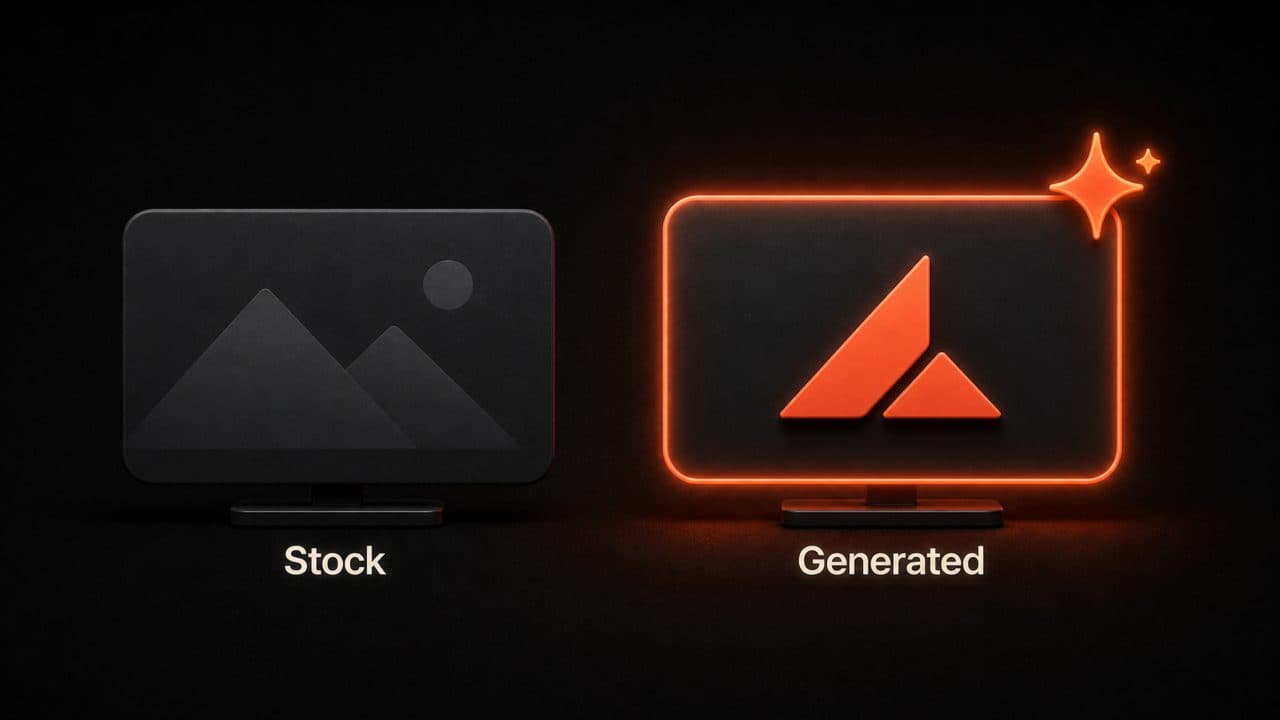
Sora, Veo, Flux, and other generative video models are getting better every month at creating custom visuals. You'll stop using generic stock clips and start generating video that matches your exact brand and message. Even static images can now be turned into stunning video with AI, adding motion and depth to assets you already have.
A fintech company won't use a generic "person working at desk" clip from a stock library. They'll generate a visual of their actual product interface. A SaaS company won't use a generic "office meeting" clip. They'll generate a video showing their specific software in action.
Here's why this matters: Your video doesn't have to match what's available on stock footage sites anymore. It matches what your brand needs. Exactly.
Generic stock footage stands out as generic. Generated visuals feel custom. They feel premium. They feel like you invested in production, even if you generated them in minutes.
By end of 2026, AI-generated visuals will outnumber stock footage visuals in professional marketing videos. That's a massive shift.
Trend 4: Hyper-personalized video at scale
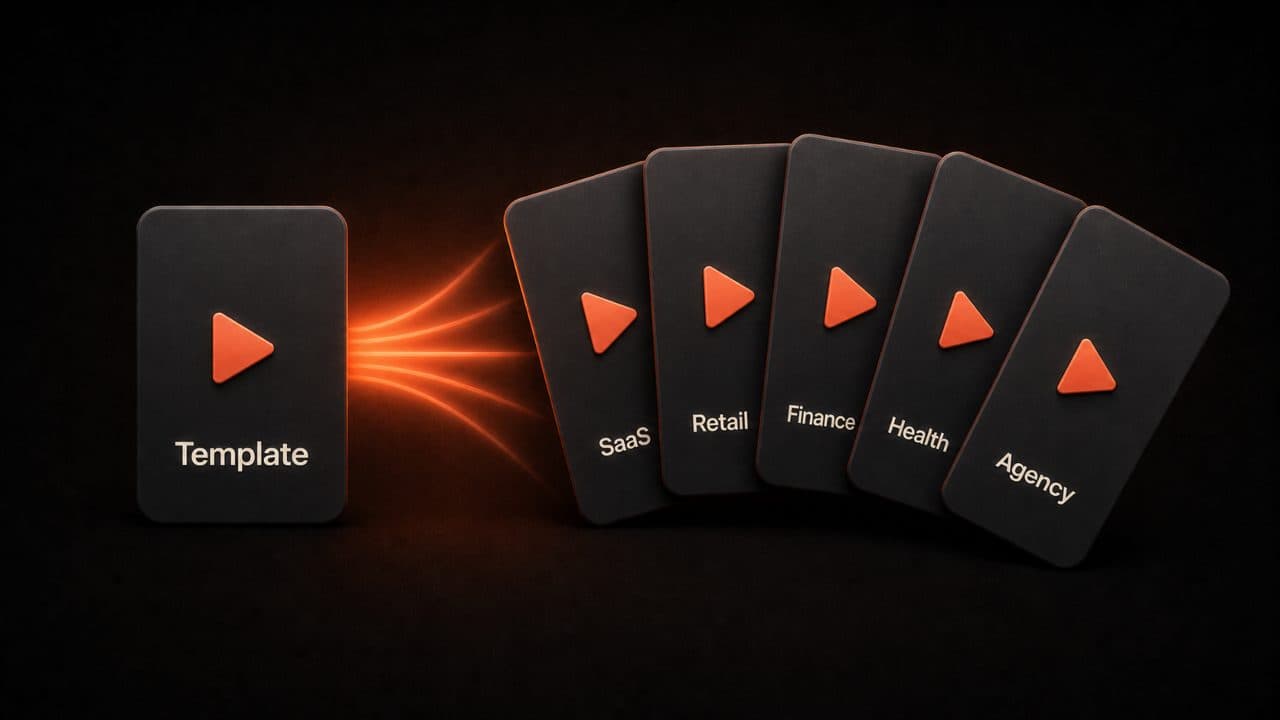
Netflix recommendation algorithm shows you different content than your friend. YouTube recommends different videos to different users. Video marketing is moving the same direction.
AI can now generate thousands of personalized video variations from one template. Instead of sending all customers the same product demo video, you send personalized versions.
One video for small businesses. One for enterprises. One for agencies. One for nonprofits. Each mentions their specific use case. Each addresses their specific pain point. Each shows your product solving their specific industry problem.
The result is measurable. When Synthesia and similar platforms tested this, click-through rates increased 50-80% compared to generic videos. Some tests showed conversion rate improvements of 30-40%.
Personalization works. Everyone knows this. The problem used to be scale. You can't hire a video team to create 100 different videos. But AI can. You create one template. AI generates 100 variations in minutes.
This becomes standard in 2026. Companies not doing personalized video will look lazy.
Trend 5: AI video transparency and trust
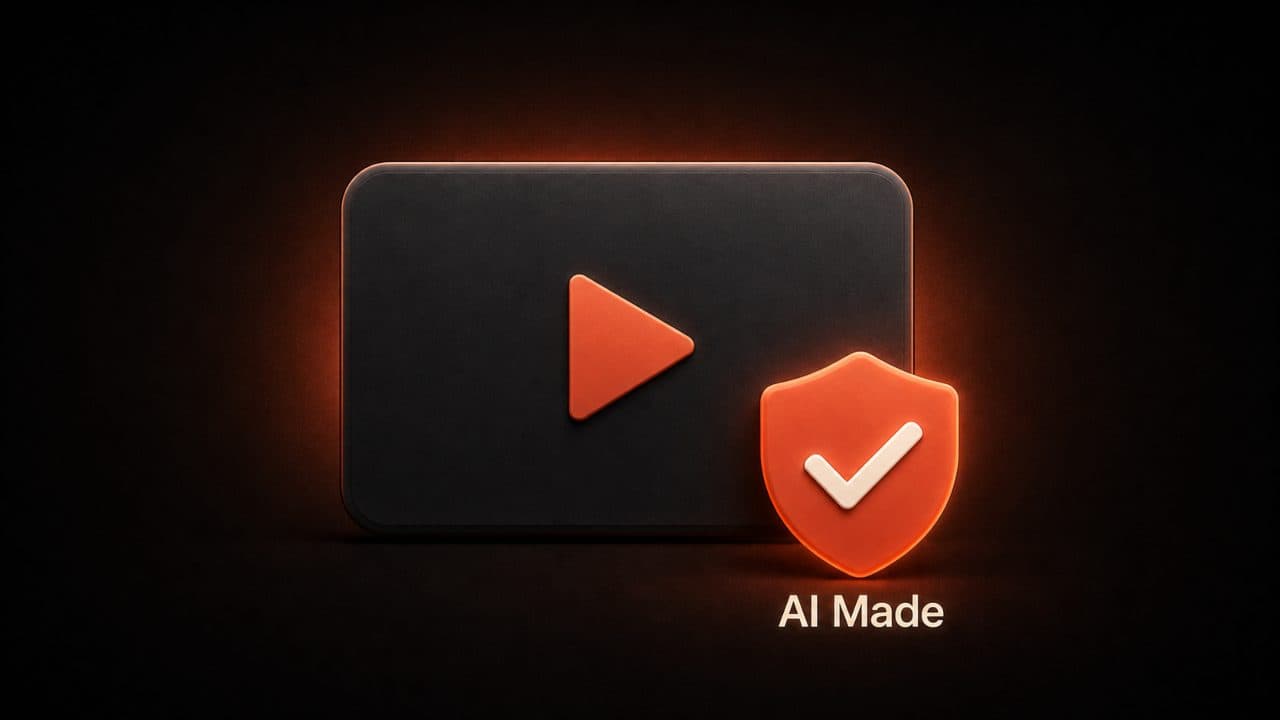
As AI video becomes mainstream, audiences will ask: "Is this real?" That question will make transparency a competitive advantage.
Brands that disclose AI-generated content upfront will build more trust than brands that hide it. This seems counterintuitive. Shouldn't AI be seen as cheaper, lower quality? Not according to the data.
When Unilever tested transparently labeled AI ads versus unlabeled content, trust metrics actually increased 12%. People appreciated the honesty. They trusted the brand more because the brand wasn't trying to deceive them.
By the end of 2026, expect regulations requiring disclosure of AI-generated video in many countries. The EU is already moving in this direction. The US will follow. Brands that are transparent now are ahead of the curve.
You'll get ahead by being honest. By saying "This video was created with AI. Here's why." Audiences respect transparency more than they respect the illusion of human production.
The scale of video in 2026
Here's what's happening now: 91% of businesses use video in their marketing, according to Wyzowl's 2026 report. That's almost every business.
By the end of 2026, 75% of all marketing videos will be AI-generated. That's not a small shift. That's most video production moving from humans to machines. That's a complete transformation of how companies produce video content.
Think about what that means. Today, you're the unusual one if you're using AI video at scale. By December 2026, you're the unusual one if you're NOT using AI video at scale.
The companies investing in AI video now will have hundreds of videos by end of year. The companies still debating it will have five.
How to use these trends today
You don't need to wait for 2027 to act. You can't afford to wait. Start with one trend that fits your business right now. Our AI video marketing strategy guide walks through how to build a plan around these shifts.
If you're managing 10 content pieces per month and using five different tools, use Trend 1. Pick one all-in-one agent. Go all-in. Cut tool switching by 80%.
If you have blog posts sitting in your library not getting views, use Trend 2. Rewrite each one as a video script. Generate video. Cut it into three social clips. Suddenly each blog post generates 500 new views.
If your brand looks generic in video, use Trend 3. Generate custom backgrounds or product visuals. Stop using stock footage. Your videos will stand out.
If you have customer data or email list segments, use Trend 4. Create a template and generate 10 variations for different audience segments. Track which segments convert best. Double down on winning segments.
If you're nervous about AI, use Trend 5. Test disclosing AI-generated video and measure engagement. You might be surprised.
FAQ
Will AI-generated video ever match human-produced video quality?
It already does for most use cases. Talking head videos, educational content, and promotional videos from AI platforms now match or exceed typical human-produced videos in quality. The gap narrows every month. True cinematic video (think Marvel movie trailers) is still years away. But for business video, AI is here. We compared the best AI video generators for beginners if you want to see current quality levels.
How will AI video impact video editors and creators?
The low-end editing work (quick cuts, subtitles, transitions, color correction) will move to AI. That work will disappear. The high-value work like creative direction, storytelling, brand voice, and strategy becomes more important.
Editors who learn to be prompt engineers and creative directors will thrive. They'll spend their time on strategy and creativity instead of technical editing. Their hourly rate will increase because they're doing high-value work.
Editors who only know technical skills will struggle. They'll compete with AI on speed and cost. They'll lose. The shift toward making videos without editing skills is already well underway.
What's next
AI video is moving fast. These five trends will shape 2026. But the trends themselves will evolve. The platforms will get better. The quality will improve. The cost will drop.
The teams that experiment with all five trends, even if they start with just one, will be ahead in 2027. They'll have systems in place. They'll know what works for their audience. They'll be producing content at 10x the pace of their competitors.
The teams that wait will be scrambling to catch up.
Trend 6: The economics shift
Here's what most people miss: AI video changes the economics of content production completely.
A human video producer costs $2,000-$5,000 per video. Takes 4-6 weeks. You get one video.
An AI video generator costs $5-$50. Takes hours. You get one video.
At scale, the difference is massive. You could produce 100 AI videos for what one human-produced video costs. With that budget flexibility, you can afford to experiment. You can afford to fail. You can afford to test new ideas.
If 10% of your videos succeed, you need to make 100 videos to find 10 winners. With AI, you can. With human producers, you can't. You can only afford to make five videos. You're praying all five succeed.
This economic shift favors fast-moving teams. Teams that iterate. Teams that test. Teams that fail fast and move on. The old model of making one perfect video is dead.
What this means for your business
Your competition is shifting to AI video right now. Not in 2027. Not next quarter. Right now.
The companies that moved to AI video in early 2026 will have hundreds of videos by mid-year. The companies that wait until late 2026 will be playing catch-up.
Video production becomes a numbers game. More volume. More tests. More learning. The team with more videos wins.
This applies to every industry. Every company size. Every team. There's no advantage in waiting.
What to measure
When you implement these trends, measure three things.
Measurement 1: Video production speed
How long does it take to go from idea to published video? With a human producer, it's 4-6 weeks. With AI, it should be hours. If it's taking you days, you're doing something wrong.
Target: Get a full video from idea to publish in under 2 hours. If you're faster, great. If you're slower, streamline your process.
Measurement 2: Engagement metrics
Does video increase your engagement compared to text? Compare click-through rate, view rate, and watch time for pages with and without video. Our video SEO strategy guide covers how to measure and improve these numbers.
Target: Pages with video should have 2-3x higher engagement than pages without video. If they don't, your videos aren't good. Fix them or choose better topics.
Measurement 3: Cost per video
Calculate your total cost per video. Include AI tool subscription, time spent creating, editing, publishing.
Target: Under $50 per video when you reach scale. At volume, this should be easy.
The five mistakes everyone makes
When companies adopt these trends, they usually make the same mistakes.
Mistake 1: Treating AI video as quick and dirty
Some teams use AI video as shortcut. They skip planning. They skip messaging. They just generate video and publish.
AI is fast. That doesn't mean you should skip the thinking part. The best AI videos come from teams that plan them well. Good script. Good planning. Then AI execution. Our AI scriptwriting guide covers how to write scripts that actually hook viewers.
Mistake 2: Overestimating speed gains
AI doesn't make everything instant. Planning still takes time. Strategy still takes time. The speed comes from execution, not planning.
Mistake 3: Forgetting about your audience
These trends matter only if they connect with your audience. Personalization is great only if you're personalizing to something your audience cares about. Format-agnostic content is great only if your audience actually uses those platforms.
Mistake 4: Too much change at once
Don't try to implement all five trends simultaneously. Pick one. Get good at it. Then add another. Incremental change works. Massive overhaul fails.
Mistake 5: Ignoring results
You'll generate videos that flop. That's normal. The mistake is ignoring why they flopped. Track what works and what doesn't. Double down on winning formats.
Start today
Pick one trend. Pick right now. Not tomorrow. Not next week.
Run a 30-day test using one trend. Create 10 videos using that trend. Measure the results. See what happens to your engagement, reach, or conversions.
You'll have proof that this trend matters. You'll have data. You'll have momentum to move to the next trend.
Your competition is already doing this. They're ahead. The question is how far ahead do you let them get?
Start today. Pick one trend. Create 10 videos using that trend. Measure the result.
That's how you catch up.